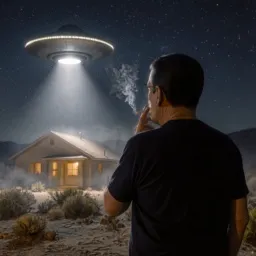
The conversation traces how societies throughout history have fallen to seemingly inferior forces when their social bonds weakened. Bloom contends that the anthrax attacks serve as a deliberate distraction while more devastating plans may be developing. He describes the current moment as a confrontation between pluralistic modernity and religious fundamentalism, with the outcome hinging on whether Western civilization can articulate its own values with genuine passion.
Earlier in the program, Richard C. Hoagland reports on the successful orbital insertion of the 2001 Mars Odyssey spacecraft and discusses its potential to discover water and signs of life on Mars. Art also addresses the Princeton Global Consciousness Project graph from a recent mass consciousness experiment.
Key Moments
Mars Odyssey enters orbit: Hoagland reports that Mars Odyssey has just successfully entered orbit around Mars, with aerobraking ahead and instruments aimed at finding subsurface water and possible chlorophyll.
Ground Zero compared to Martian ruins: Hoagland says aerial photos of the World Trade Center wreckage remind him of shattered remains he sees in Mars images, raising the question of what could have produced comparable destruction on the red planet.
Slave-maker ants and the panic pheromone: Bloom uses slave-maker ants as a paleopsychological model: invading ants release a panic pheromone that breaks the rival colony's bonds, paralleling how terrorism is meant to fracture an enemy society.
Martyrdom, paradise, and 70 virgins: Bloom explains the martyr's bargain in fundamentalist Islamic culture: a young man who kills five infidels and dies goes straight to paradise with 70 virgins, a powerful pull on sexually segregated youth.
New York as a hive of misfits: Bloom reads his own anthem to New York, a giant hive for the brilliant, the odd, the vision-ridden, framing the city's resilience after 9/11 as a war of memes and ideas, not just steel.
Preserved source
From the original ArtBell.com archive
The 2003 commemorative archive preserves the contemporary listing for this broadcast. Links and descriptions reflect the original site and may be outdated.
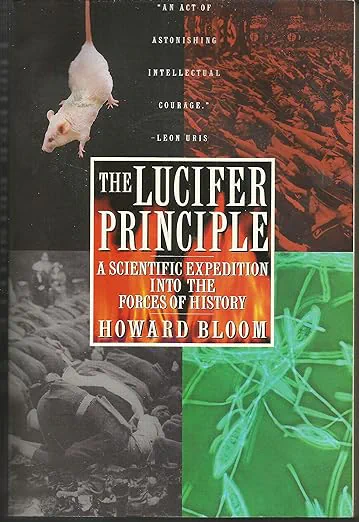
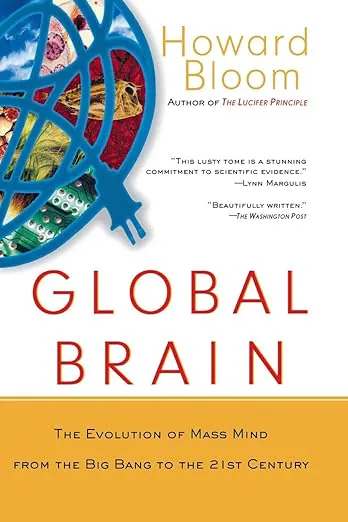
View the original program listingBooks by This Guest
Selected titles from the guest bibliography. Use them as context for this appearance, not required listening.
Continue exploring
Paths out of this episode
A stronger next move anchored to this specific broadcast.