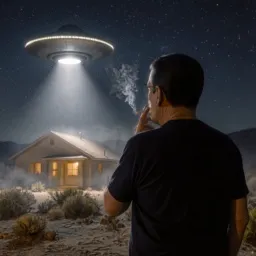
May 14, 1999: UFO Crash - Whitley Strieber & Bill McDonald
McDonald details the interior layout of seven seats arranged around a bell-dome reactor, with crew stations that merged seamlessly into the occupants' bodies. He describes the alien occupants as childlike humanoids with screen-mesh skin who absorbed nutrients and oxygen through their tissue while immersed in a ballistic fluid. The craft's layered hull contained patterns resembling neural ganglia that functioned like massive microprocessors.
The discussion covers the craft's multiple flight modes, including atmospheric flight using cambered lift, underwater submersion as a neutrally buoyant vessel, and the theory that lightning caused the crash. McDonald also addresses the secrecy surrounding recovered alien technology and the gradual transfer of that technology from military to private sector control.
Key Moments
The Roswell craft was 'grown,' not assembled: McDonald describes the Roswell ship as a single integrated organism rather than a manufactured vehicle, with stingray-like geometry and shark-tooth-shaped vertical fins, and a flight crew distinct from the seemingly living craft.
Outer skin is the engine: McDonald asserts the Roswell ship achieved both anti-gravity hovering and conventional cambered-lift atmospheric flight because its outer skin functions as the propulsion system.
Seven seats and the bell-dome reactor: McDonald walks through the cabin layout: seven seats in three rows around a bell-dome reactor that morphs out of the floor and merges with the ceiling via a 'magnetic waveguide,' a configuration he says is virtually identical to Bob Lazar's reactor.
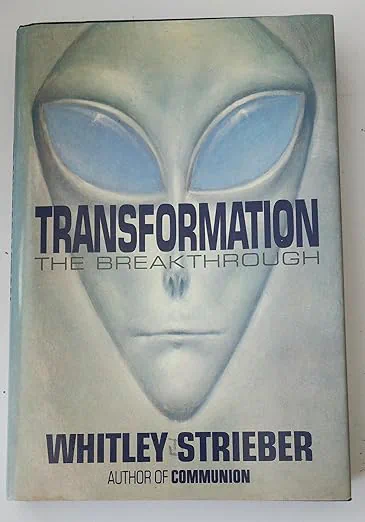
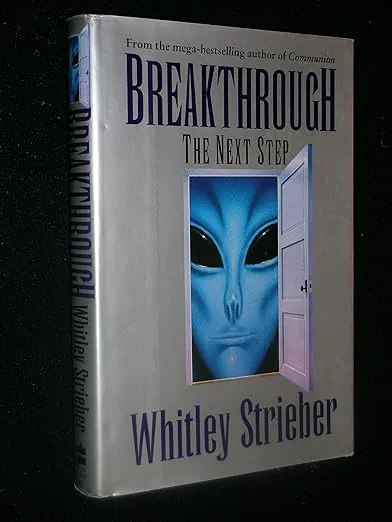
Strieber's 'Breakthrough' dome moment: Strieber reveals that McDonald's description matches a black dome-shaped object he saw inside a UFO during an experience documented in his book Breakthrough - the first time he has heard another source describe it.
Wright-Patterson eyewitness pulled in by Twining: McDonald names a young flight-school graduate with a photographic memory whom he suspects Nathan Twining personally extracted to document the Roswell craft's final four months of study at Wright-Patterson.
Preserved source
From the original ArtBell.com archive
The 2003 commemorative archive preserves the contemporary listing for this broadcast. Links and descriptions reflect the original site and may be outdated.
View the original program listingBooks by This Guest
Selected titles from the guest bibliography. Use them as context for this appearance, not required listening.


Continue exploring
Paths out of this episode
A stronger next move anchored to this specific broadcast.