The findings raise immediate questions. Five perfectly machined squares measure exactly six millimeters on each side, yet each weighs 160 milligrams instead of the expected 97 milligrams for pure aluminum at that size. This weight discrepancy suggests something denser may be hidden beneath an aluminum coating. Linda reports that when one square was cut open, the interior appeared to be nothing but shiny aluminum, deepening the puzzle. Retired Sandia Labs metallurgists weigh in, suggesting the pieces may have an aluminum shell concealing a different internal metal.
The episode captures a genuine scientific mystery unfolding in real time, with Linda carefully distinguishing between what the data shows and what remains unknown. Further testing with a metallurgist is scheduled, leaving the question of origin, whether terrestrial scrap or something far stranger, tantalizingly unresolved.
Key Moments
Anonymous Midwestern scientist tests the alleged Roswell fragments: Linda Moulton Howe describes the first round of lab analysis on ten metal fragments Art received from an anonymous source claiming Roswell provenance - five identical 6mm x 6mm squares, each weighing exactly 160 milligrams, examined with a scanning electron microscope and EDS.
EDS results: greater than 99 percent aluminum, no other element detected: Howe relays the scientist's energy dispersive spectroscopy result: every fragment surface tested as greater than 99 percent aluminum with no other element detectable, matching the anonymous source's letter calling it 'pure extract aluminum' used as a conductor in a propulsion system.
Embedded silicon and manganese-iron granules raise functional questions: The scientist finds 1-2 micron silicon granules embedded in one square and 80 percent aluminum / 10 percent manganese / 10 percent iron granules on the thin blade and 'vent' pieces, then cuts open one square to find shiny aluminum interior with no apparent structural detail.
Contrast with Jesse Marcel Jr.'s recollection of Roswell debris: Howe notes that Jesse Marcel Jr.'s account of material his father brought home in July 1947 - crinkly foil that regained its shape, balsa-light beams with fuchsia symbols - is completely different from the all-aluminum fragments now under analysis.
Books by This Guest
Selected titles from the guest bibliography. Use them as context for this appearance, not required listening.
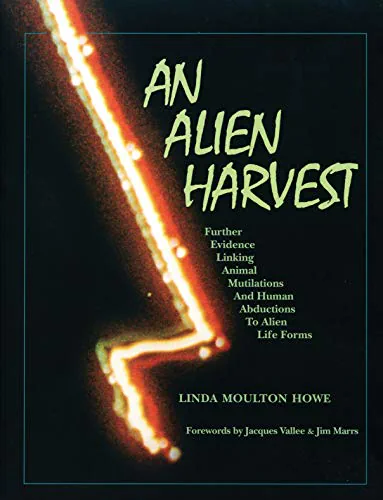
An Alien Harvest: Further Evidence Linking Animal Mutilations and Human Abductions to Alien Life Forms
1989
Continue exploring
Paths out of this episode
A stronger next move anchored to this specific broadcast.