June 13, 2001: Underwater City - Linda Moulton Howe & Stephan Schwartz
Dr. Frank Muller-Carger of the University of South Florida, who viewed the sonar images firsthand, describes seeing straight-edged geometric shapes across several square kilometers, noting that such features at that scale would be an extraordinary geological formation if natural. Linda reads Plato's famous account of Atlantis sinking beneath the sea, drawing parallels to the Cuban discovery.
Remote viewing pioneer Stephan Schwartz then joins, describing his Deep Quest submarine experiments that proved psychic functioning operates independent of electromagnetic shielding. He recounts using remote viewers to locate Cleopatra's Palace and the Lighthouse of Pharos in Alexandria, Egypt, and proposes organizing a mass remote viewing experiment targeting the Cuban site before cameras reach the ocean floor.
Key Moments
National Geographic signs on for exclusive Cuba coverage: Linda Moulton Howe reports that Barbara Moffitt of the National Geographic Society confirmed to her by phone that NGS has now signed an official agreement for exclusive magazine coverage of the Zalitsky/Weinzweig deep-water expedition off western Cuba. Paulina Zalitsky, a former Russian ocean engineer who defected to Canada, is currently testing the ROV camera equipment in Mexico for a summer dive to the 2,200-foot site.
Dr. Muller-Karger on the sharp-edged sonar images: Howe airs an interview with Dr. Frank Muller-Karger, professor of oceanography at the University of South Florida, who has personally seen the side-scan sonar images. He confirms triangular and rectangular forms with sharp straight edges spread across tens of square kilometers - features he says are extremely unusual in nature at that scale and could indicate either a unique geological formation or man-made construction.
Plato's Atlantis read on the air: Howe reads at length from Plato's Timaeus and Critias dialogue - the account of an island larger than Libya and Asia together, lying beyond the Pillars of Heracles, ruled by a confederation of kings, that was swallowed up in a single grievous day and night by earthquakes and floods, leaving the ocean impassable from the resulting shoal mud.
Side-scan sonar isn't a photograph: Underwater archaeologist Michael Arbusnot explains the limits of side-scan sonar: depth, water conditions, ship motion, and material reflectivity all distort the image. He recounts mistaking coral growth for a cannon on his own dive and stresses that until video cameras get down to 2,200 feet off Cuba, no one knows whether the geometric shapes are structures, geology, or sonar artifacts.
Bugs's wife vetoes the dig: Bell delivers the night's other headline: he reached Bigfoot caller 'Bugs' a few hours before the show, and Bugs's wife has vetoed any further cooperation with attorneys or any return to the Texas burial site. The map and Bugs's real name remain in Bell's secure custody, and a planned dig to recover the remains is off - at least for now.
Preserved source
From the original ArtBell.com archive
The 2003 commemorative archive preserves the contemporary listing for this broadcast. Links and descriptions reflect the original site and may be outdated.
View the original program listingBooks by These Guests
Selected titles from the guest bibliography. Use them as context for this appearance, not required listening.
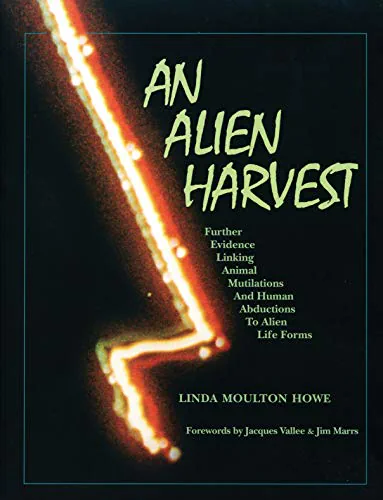
An Alien Harvest: Further Evidence Linking Animal Mutilations and Human Abductions to Alien Life Forms
1989


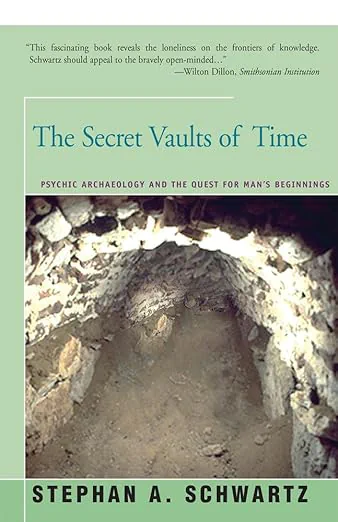
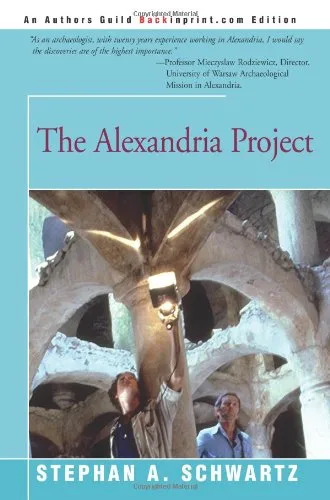
The Alexandria Project
Continue exploring
Paths out of this episode
A stronger next move anchored to this specific broadcast.