February 14. 2002: Bioterrorism, Secret Life of Germs - Dr. Philip Tierno | Earthquake Predictions - Jim Berkland
In the second half, microbiologist Dr. Philip Tierno discusses the mechanics of bioterrorism, germ transmission, and the anthrax attacks that followed September 11th. He reveals that the Daschle letters contained weapons-grade spores of extraordinary purity and explains how aerosolized anthrax remains his greatest bioterror concern. Art and Tierno also explore how emerging diseases jump species, the risks of international air travel spreading pathogens, and the unsettling number of microbiologists dying under suspicious circumstances.
The conversation shifts to everyday germ exposure as Tierno shares findings from sampling New York City hotspots, from taxi seats to money, revealing the invisible microbial world riding on every surface. He emphasizes that 80 percent of infectious disease spreads through simple contact and urges basic hand hygiene as the strongest defense.
Key Moments
Missing-pet ads as a quake precursor: Berkland recounts that just before the 1989 World Series quake the local paper ran 58 missing-dog and 27 missing-cat ads versus a normal 15-20 dogs and 3-4 cats, and notes the L.A. Times currently shows 17 missing dogs.
Jack Coles calls a 4.0 to the minute: Berkland tells the story of phoning Jack Coles to debunk him, only to have Coles predict a 4.2 quake within 30-40 miles of San Jose around 9:30 the next day; a 4.0 hit at 9:40 the following morning.
Kodiak's 100-gamma anomaly before the 1964 Alaska quake: Berkland describes a Kodiak ionosphere sensor jumping to a 100-gamma anomaly - 30-50x normal - hours before the 8.5 Great Alaskan earthquake on the day of a full moon, and the scientific community's tendency to dismiss it as coincidence.
Coles evacuated his family on 9-11-91: Berkland recounts that Coles was so alarmed by his signals plus a personal premonition in 1991 that he sent his family out of San Jose with media in tow on the date 9-11-91 - and reflects on the eerie 10-year echo of that date.
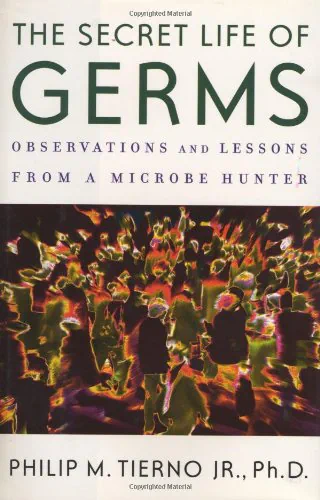
Germs are four billion years older than us: Tierno frames his book's central thesis: germs originated roughly 4 billion years ago, with fossil cyanobacteria preserved in 3.5-billion-year-old Australian rock - meaning every form of life, including humans, evolved downstream of microbes.
Books by This Guest
Selected titles from the guest bibliography. Use them as context for this appearance, not required listening.
Continue exploring
Paths out of this episode
A stronger next move anchored to this specific broadcast.