
Begich explains how the HAARP antenna array is being expanded from 48 to 180 elements with the goal of reaching one billion watts of effective radiated power. He explains how the system can heat the ionosphere, potentially disrupting communications, penetrating underground structures, and influencing human brain chemistry through ELF frequencies. Begich details how the European Parliament passed a resolution opposing such manipulation technologies.
Art and Begich also examine the potential for HAARP to alter weather patterns by shifting jet stream flow, and they discuss broadband over power lines, a proposed technology that would have devastated the radio spectrum. The conversation touches on Tesla's early experiments and the military applications of directed energy weapons.
Key Moments
What HAARP Is: Begich opens by defining HAARP as the High Frequency Active Auroral Research Project, a joint Air Force and Navy facility in Alaska, describing it as a field of 48 antennas that converts electrical energy into focused radio frequency energy aimed at the ionosphere.
European Parliament Resolution: Begich recounts how unclassified data on HAARP convinced the European Parliament that 'manipulation of human beings' via the technology was possible, and notes the Russian Duma followed in August 2002 by passing a resolution opposing HAARP for its military applications.
Tickling the Tail of a Global Tiger: Art frames HAARP and similar systems as humanity moving from local scientific experiments to deliberately manipulating planetary environmental systems; Begich agrees, citing underwater sonar as a parallel and warning that bombs and bullets had local effects while these new systems carry global implications.
DARPA Takes Over HAARP Funding: Begich reveals that DARPA, the Defense Advanced Research Projects Agency, has taken control of HAARP's next phase of funding, citing a 1997 DARPA topic (97-088) on using HAARP and HIPAS for earth penetrating tomography, and notes 'those who control the gold control the destiny.'
Tether Experiment Pulled Energy From the Ionosphere: Begich argues the Space Shuttle tether experiment was not just about dragging a wire through the ionosphere but about drawing energy off it; the conducted energy was far greater than expected, nearly destroyed the shuttle, and demonstrated that ionospheric energy could in principle be tapped at scale.
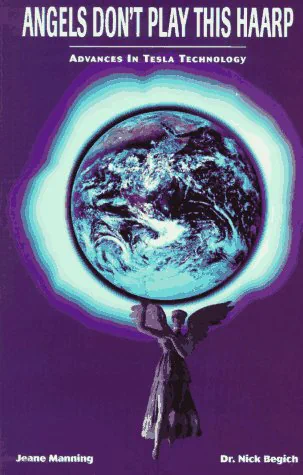
Books by This Guest
Selected titles from the guest bibliography. Use them as context for this appearance, not required listening.
Continue exploring
Paths out of this episode
A stronger next move anchored to this specific broadcast.