
Schwartz explores the relationship between consciousness, creativity, and psychic functioning. He argues these are three manifestations of the same information channel, citing research showing that CEOs who score high on precognitive tests consistently lead more profitable companies. He describes how breakthrough ideas emerge from the collective unconscious, noting that Edison was the 37th person to patent a light bulb concept.
Schwartz discusses his ongoing 2050 remote viewing project, where participants as early as 1978 described a blood disease sweeping out of Africa and something resembling virtual reality. He addresses the political paralysis around energy policy, comparing American oil dependence to drug addiction, and argues that climate change represents the most serious threat facing humanity, with evidence suggesting glacial transitions could occur in as few as ten years.
Key Moments
Schwartz's 1978 remote-view of 2050 predicts AIDS and virtual reality: Schwartz describes his ongoing 2050 Project, in which he has been having people remote view the year 2050 since 1978. He says viewers in 1978 and 1979 - years before AIDS was identified - described a blood disease coming out of Africa that would decimate the continent at the end of the century, and they later described what he now recognizes as virtual-reality avatars and online conferences where everyone arrives as something else.
Egyptian Old Kingdom climate parallel and the 40-year glaciation warning: Schwartz uses the collapse of the Egyptian Old Kingdom as a worked example of civilization-ending climate shift, then cites a July 1999 American Scientist piece on ice cores showing the transition from interglacial to glacial period may take as little as 40 years, possibly only 10. He notes models that suggest such a flip could wipe out 40 percent of the human race.
Reality is the aggregate of billions of acts of intentioned will: Pressing back on Cheney's line that conservation is only a personal virtue, Schwartz delivers his core thesis: reality is the aggregate of billions of small acts of intentioned will, and the small consumer choices around soap, lighting and vehicles are how mass consciousness changes the climate. He frames this as the secret cabal the Founders understood when they designed the Republic.
Project Deep Quest and the Ingo Swann pre-Mercury remote-view: Schwartz reminds Art he ran Project Deep Quest, the original submarine remote-viewing experiment proving distance is irrelevant to the signal, then walks through Ingo Swann and Harold Sherman's pre-flight remote view of Mercury. They described a slight atmosphere and a pear-shaped magnetic field weeks before the Mariner 10 probe arrived and confirmed both features.
Industrial agriculture, animal consciousness, and species hubris: Asked what he has been focused on, Schwartz indicts industrial agriculture, calling chicken and pig confinement systems deeply immoral and tying them to mad cow disease and the destruction of the Chesapeake Bay's oyster fisheries. He argues that denying consciousness to animals is species hubris contradicted by remote-viewing, healing, and animal-cognition research, and that we are 'workstations in the cosmic internet.'
Books by This Guest
Selected titles from the guest bibliography. Use them as context for this appearance, not required listening.
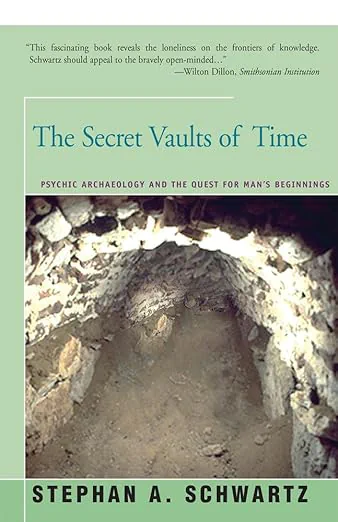
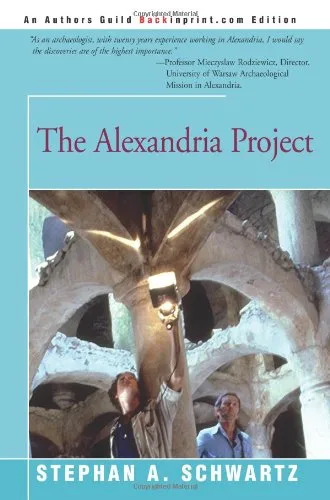
The Alexandria Project
Continue exploring
Paths out of this episode
A stronger next move anchored to this specific broadcast.