Dr. Moody describes a new wave of "empathic death experiences" in which bystanders at the bedside of dying patients report leaving their own bodies, seeing the deceased in spirit form, and witnessing reunions with departed relatives near a brilliant light. He attributes the rising number of these reports to changing hospital practices that now allow family members to remain present during the moment of death. He also discusses cases in which terminally ill or unconscious patients suddenly become vividly lucid shortly before death.
An emergency physician calls in to share a case where a brain-dead cardiac arrest patient, upon recovery, described how rescuers could not get her stretcher through the restaurant kitchen, a detail independently confirmed by the responding paramedic. Dr. Moody also recounts the famous case of Pam Reynolds, whose brain was drained of blood for 40 minutes during aneurysm surgery yet who reported detailed observations of the procedure upon revival.
Key Moments
The 'shared death' challenge to the dying-brain theory: Moody argues the standard hallucination theory cannot explain bystanders at the bedside reporting they too left their bodies and saw the dying person greeted by relatives in light.
OBEs from mirrors, telescopes, and DMT: Moody confirms out-of-body states can be triggered by brain stimulation, mirror gazing, sensory deprivation, even astronomers staring through telescopes - and Art jokes about a caller who screamed 'DMT' before hanging up.
The life review: feeling what others felt: Moody describes the panoramic life review where the dying see every act they ever did, but witness it as a third person and feel empathically the pain or joy they caused others.
Pam Reynolds' 40-minute clinical death: Moody recounts Pam Reynolds' standstill brain surgery: blood drained, body cooled, brainwave flat for ~40 minutes - yet she returned describing the surgery, the surgeon's electric-toothbrush-like instrument, and a tunnel reunion with an uncle.
ER doctor calls in: 'They couldn't get me through the kitchen': A board-certified emergency physician with 23 years experience calls Art live to recount a near-brain-dead cardiac arrest patient who later told him exactly the obstacle the medics had faced - corroborated independently by the responding paramedic.
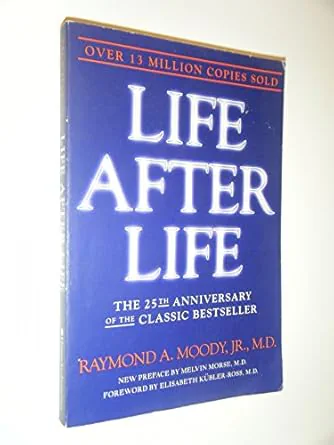
Books by This Guest
Selected titles from the guest bibliography. Use them as context for this appearance, not required listening.