West explains how geological weathering patterns on the Sphinx prove it must be at least 10,000 years old, far predating the conventional date of 2500 B.C. His seismographic surveys have detected a substantial chamber buried beneath the Sphinx's paws, precisely where Edgar Cayce predicted a repository of ancient knowledge would be found. West describes the pyramids not as tombs but as sophisticated technological instruments designed to facilitate higher states of consciousness, noting their profound emotional impact on visitors who meditate inside the King's Chamber. The program also features a segment with Linda Moulton Howe reporting from Britain alongside German researcher Michael Hesemann, who reveals that photo analyst Bob Shell has confirmed the Santilli autopsy film stock dates definitively to 1947. Art Bell plays a never-before-aired recording of Barry Goldwater describing how General Curtis LeMay angrily refused his inquiry about classified materials at Wright-Patterson Air Force Base.
A landmark broadcast connecting ancient mysteries to modern revelations about what governments may be hiding.
Key Moments
What the Sphinx is and why its astrological geometry matters: West gives a grounded primer on the Sphinx - a 240-foot, 66-foot-tall lion-bodied human-headed statue carved from solid bedrock - and explains why the geometry seems to encode the axis of Leo and Aquarius. He treats the lion as a universal solar symbol and the human head as the capacity of the physical to become spiritual.
Seismographs confirm a chamber under the Sphinx where Edgar Cayce said it would be: Asked about Edgar Cayce's Atlantean Library prediction, West says his team's seismograph survey, plus a less precise earlier Japanese survey, both detect a substantial chamber roughly 9 by 12 meters sitting about 15 feet beneath the bedrock between the paws of the Sphinx - exactly the location Cayce described.
Atlantis as Antarctica: Hapgood, Einstein, and crustal shift: West argues that two new books - Graham Hancock's Fingerprints of the Gods and Rand and Rose Flem-Ath's When the Sky Fell - revive Charles Hapgood's crustal-shift theory to explain a global cataclysm around 9,600 BC. He notes Einstein corresponded with Hapgood and found the theory plausible, and that the Flem-Aths argue Plato's Atlantis is what is now Antarctica.
Books by This Guest
Selected titles from the guest bibliography. Use them as context for this appearance, not required listening.
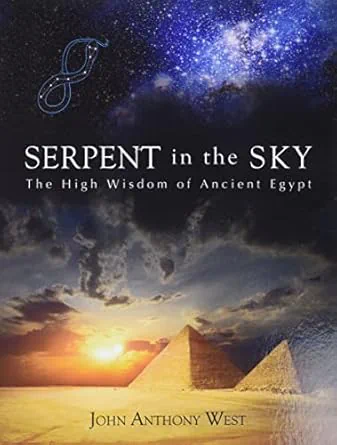
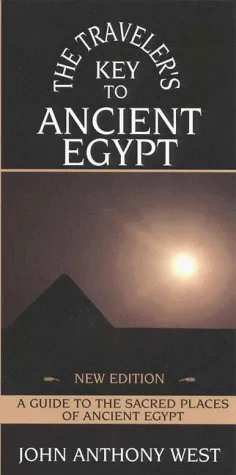
The Traveler's Key to Ancient Egypt: A Guide to the Sacred Places of Ancient Egypt
Continue exploring
Paths out of this episode
A stronger next move anchored to this specific broadcast.