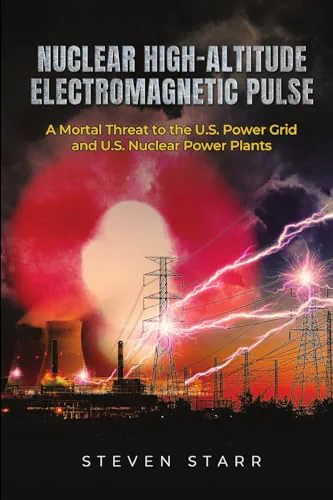
Even a limited exchange between India and Pakistan involving just 100 atomic bombs would generate enough stratospheric smoke to reduce global crop production for a decade and potentially starve two billion people. Starr notes that the U.S. and Russia maintain roughly 2,000 launch-ready weapons each, capable of firing in under 15 minutes, and that a single high-altitude detonation over the East Coast could knock out 60 nuclear power plants through electromagnetic pulse.
Art shares his own experience answering the DEF CON phone at Amarillo Air Force Base during the Cuban Missile Crisis. Starr laments that no leader of a nuclear weapons state has publicly acknowledged peer-reviewed science showing nuclear war represents a self-destruct mechanism for the human species.
Key Moments
Launch-ready arsenals: Starr says the U.S. and Russia each still keep about 2,000 nuclear weapons deployed for immediate use.
Minutes to launch, no recall: Starr emphasizes that missiles can be launched within minutes and cannot be recalled once fired.
Smoke blocks the sun: Starr explains how burning cities from a U.S.-Russia exchange could inject 50 to 180 million tons of smoke into the stratosphere.
Limited war, global famine: Even a limited India-Pakistan nuclear exchange is described as capable of starving up to two billion people.
EMP hits nuclear plants: Starr warns that a single high-altitude detonation over the East Coast could disable dozens of nuclear power plants.
Books by This Guest
Selected titles from the guest bibliography. Use them as context for this appearance, not required listening.