Episode 1244 · Sep 16, 2006 · 2h 38m
September 16, 2006: Space Solar Energy & Launch Systems - John C. Mankins
Key Moments
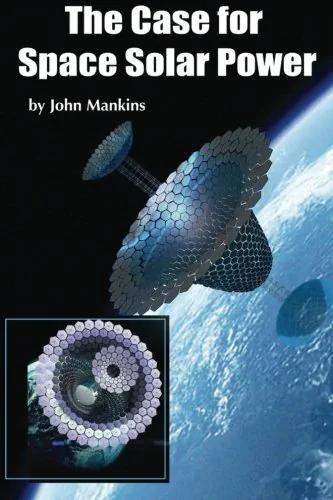
Open transcriptWhat space solar power actually isMankins lays out the core concept: ground solar suffers day/night, weather and seasons, but in space the sun shines almost constantly, so you collect energy in orbit, convert it to a beam, and send it down to Earth.
Retro-directive phased array fail-safeMankins explains the Sunstroke disaster cannot happen: a retro-directive phased array, invented by Nobuyuki Kaya, requires a pilot signal from the ground rectenna. Without it, millions of RF transmitters cannot focus and the energy smears harmlessly across space.
Beam intensity is one tenth of midday sunlightMankins quantifies the safety case: peak ground sunlight is about 1 kW per square meter, and a power beam would be about 10% of that, only in its center. A square kilometer rectenna at full sun delivers a gigawatt.
Maglev catapult as a virtual first stageMankins explains rockets burn ten times more fuel for the first 1,000 fps than the last, so a maglev catapult giving even a small initial push acts as a virtual electric first stage with disproportionate effects on launch economics.
StarTram - magnetically levitated launch tube to spaceMankins describes Jim Powell's StarTram concept: accelerate to orbital velocity on the ground, then coast up through an evacuated tube held aloft by a ground-based electromagnetic field. When the vehicle exits the tube, it is already in space, no rocket required.
The conversation expands to space solar power, the concept of collecting energy in orbit where sunlight is constant, then beaming it to Earth via microwave or laser. Mankins describes fail-safe phased arrays that prevent the beam from targeting anything without a ground-based pilot signal. He estimates the technology could become cost-competitive within 10 to 20 years, potentially delivering hundreds of gigawatts to multiple locations from a single satellite.
Art and Mankins discuss the risks of nuclear materials in space, launch economics, and the stalled civilian space program. Mankins advocates for international cooperation modeled on commercial ventures rather than government projects. The program opens with Art sharing observations from a recent Hong Kong trip, a Pravda report about Russian journalists allegedly cooking an egg between two cell phones, and updates on the Lake Superior F-89 Scorpion mystery.
Guest Library
Books by This Guest
Selected titles from the guest bibliography. Use them as context for this appearance, not required listening.