
Episode 1433 · Sep 15, 2015 · 2h 20m
September 15, 2015: Loyd Auerbach
Key Moments
Open transcriptAshtray launches at the Banta InnAuerbach describes seeing a glass ashtray pop into the air, flip, and slam back onto the bar during a haunted-inn investigation.
Poltergeists as unconscious PKAuerbach defines poltergeist cases as unconscious psychokinetic movement of objects by living people.
Taking responsibility stops the activityAuerbach says some identified poltergeist agents can consciously shift the activity when they accept responsibility for it.
Histamine sweat and electrostaticsDiscussing Nina Kulagina, Auerbach says analysis found histamines in sweat, and histamines can react to electrostatic fields.
Crisis apparitions from living peopleAuerbach explains that apparitions can be projections from living people in crisis or out-of-body states, not just dead spirits.
Auerbach distinguishes between conscious apparitions and residual hauntings, explaining that most ghost experiences involve loved ones appearing at the moment of death to say goodbye. He describes witnessing psychokinetic events firsthand, including a glass ashtray launching into the air at the haunted Banta Inn and objects moving inside sealed rooms during experiments with the late author Martin Caidin, creator of The Six Million Dollar Man. Auerbach reveals that the key to psychokinesis is not forceful concentration but a calm, visualization-based altered state similar to an athlete being in the zone.
The discussion turns to Soviet research on psychic Nina Kulagina, whose apparent telekinesis was traced to histamine-laden sweat generating electrostatic fields strong enough to move objects. Auerbach also addresses poltergeist phenomena, attributing them not to spirits but to unconscious psychokinetic outbursts from living people under stress.
Guest Library
Books by This Guest
Selected titles from the guest bibliography. Use them as context for this appearance, not required listening.


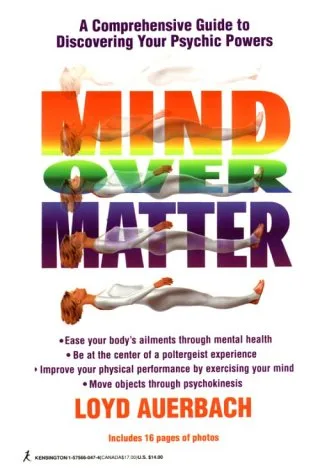
Mind over Matter
Continue exploring