0:00 / 0:00
Art Bell welcomes researcher and author Douglas Mulhall from Germany to discuss how nanotechnology is transforming medicine, energy, and daily life. The show opens with an update on the shooting incident near Art's studio the previous night and a denial-of-service attack on his website, followed by confirmation from a second NASA source that star KIC 8462852 may represent an alien civilization.
Mulhall tells the remarkable story of how Cuba developed a nanoparticle-based vaccine for bacterial meningitis in 1983, years before nanotechnology was widely known. He explains that cells naturally release nano-sized particles that can be isolated and reprogrammed to target specific diseases with precision, avoiding the devastating side effects of conventional treatments. He reports that conjugated nanoparticle therapies are now moving through FDA approval and predicts the potential to reverse heart disease by 2020.
The conversation broadens into smart dust for environmental sensing and surveillance, the role of nanotechnology in solar energy and electric vehicles, and the risks of uncontrolled nanoparticle release from car tires and consumer products. Mulhall and Art debate whether pharmaceutical companies will allow affordable nanomedicine to reach the public, explore the concept of technological singularity, and discuss whether artificial intelligence could become self-aware.
Mulhall tells the remarkable story of how Cuba developed a nanoparticle-based vaccine for bacterial meningitis in 1983, years before nanotechnology was widely known. He explains that cells naturally release nano-sized particles that can be isolated and reprogrammed to target specific diseases with precision, avoiding the devastating side effects of conventional treatments. He reports that conjugated nanoparticle therapies are now moving through FDA approval and predicts the potential to reverse heart disease by 2020.
The conversation broadens into smart dust for environmental sensing and surveillance, the role of nanotechnology in solar energy and electric vehicles, and the risks of uncontrolled nanoparticle release from car tires and consumer products. Mulhall and Art debate whether pharmaceutical companies will allow affordable nanomedicine to reach the public, explore the concept of technological singularity, and discuss whether artificial intelligence could become self-aware.
Key Moments
Cuba's meningitis breakthrough: Mulhall points to Cuba's response to a bacterial meningitis epidemic as an early nanomedicine milestone.
Cells release nanoparticles: Mulhall explains that cells naturally release nano-sized particles that became central to the medical approach.
Avoiding shotgun side effects: Mulhall contrasts targeted nanoparticle therapies with conventional treatments that shotgun the whole system.
Reverse heart disease by 2020: Mulhall claims nanoparticle research may have the capacity to reverse heart disease by 2020.
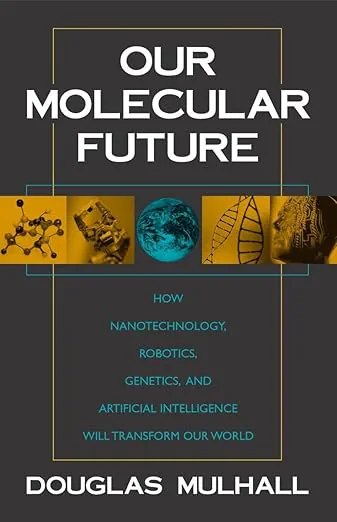
Books by This Guest
Selected titles from the guest bibliography. Use them as context for this appearance, not required listening.
Continue exploring
Paths out of this episode
A stronger next move anchored to this specific broadcast.