
0:00 / 0:00
Art Bell sits down with ethnopharmacologist Dr. Dennis McKenna, brother of the late Terence McKenna, for a wide-ranging discussion on psychedelic research and its implications for understanding consciousness. McKenna describes his decades of fieldwork in the Amazon studying ayahuasca and tryptamine-based hallucinogens, and explains how FDA-approved clinical trials at Johns Hopkins and NYU are demonstrating remarkable therapeutic results with psilocybin.
McKenna presents striking data from psilocybin research, including smoking cessation rates of 60 to 80 percent in lifetime smokers after just two high-dose sessions with counseling. He discusses how psilocybin helps terminal cancer patients overcome existential anxiety, and describes evidence that ayahuasca rewires brain neurochemistry by upregulating serotonin transporters linked to depression and addiction. Art presses McKenna on whether the entities encountered during DMT experiences represent genuine contact with another dimension or neurochemical phenomena.
McKenna navigates the line between scientific rigor and phenomenological honesty, acknowledging that everything humans experience is a model constructed by the brain, and that psychedelics may simply tune the receiver to a different frequency. He argues the war on drugs has been a trillion-dollar failure and advocates for education over prohibition, while callers share their own experiences with ayahuasca in Peru.
McKenna presents striking data from psilocybin research, including smoking cessation rates of 60 to 80 percent in lifetime smokers after just two high-dose sessions with counseling. He discusses how psilocybin helps terminal cancer patients overcome existential anxiety, and describes evidence that ayahuasca rewires brain neurochemistry by upregulating serotonin transporters linked to depression and addiction. Art presses McKenna on whether the entities encountered during DMT experiences represent genuine contact with another dimension or neurochemical phenomena.
McKenna navigates the line between scientific rigor and phenomenological honesty, acknowledging that everything humans experience is a model constructed by the brain, and that psychedelics may simply tune the receiver to a different frequency. He argues the war on drugs has been a trillion-dollar failure and advocates for education over prohibition, while callers share their own experiences with ayahuasca in Peru.
Key Moments
Ayahuasca fieldwork: Art introduces McKenna's Amazon fieldwork on ayahuasca and tryptamine-based hallucinogens.
Mainstream institutions study psychedelics: McKenna stresses that modern psychedelic research is happening at institutions like NYU, Johns Hopkins, UCLA, and Harvard.
Cancer anxiety and mystical experience: McKenna explains how psilocybin-induced mystical experience may help terminal cancer patients face death anxiety.
Psilocybin for smoking cessation: McKenna cites Johns Hopkins work using psilocybin to help lifetime smokers quit.
Books by This Guest
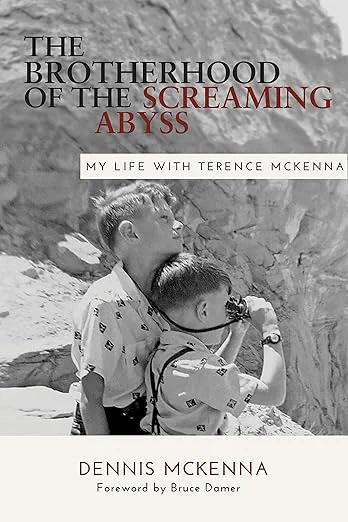
Selected titles from the guest bibliography. Use them as context for this appearance, not required listening.
Continue exploring
Paths out of this episode
A stronger next move anchored to this specific broadcast.