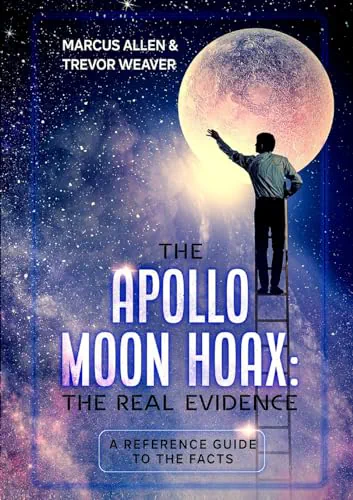
Allen also raises questions about the Apollo photography, pointing out that Kodak Ektachrome transparency film would show visible fogging at radiation levels far below what astronauts reportedly encountered, yet the returned photographs are remarkably pristine. He notes that no lead shielding or protective containers for the film were carried aboard due to strict weight limitations on the spacecraft.
Art pushes back throughout the conversation, pressing Allen on why the Soviet Union never exposed a hoax and whether protective measures could have been taken. Allen responds by citing Bernard Lovell of Jodrell Bank, who reported the Russians themselves refused to send cosmonauts beyond the radiation belts until safe return could be guaranteed.
Key Moments
Why is the Apollo film so clean?: Marcus Allen pivots from biology to photography: radiation fogs film, yet Apollo's published photos are 'brilliant.' He argues NASA took no special shielding precautions for the cameras.
REM dosage primer: Allen walks Art through radiation exposure scales - 0.5 REM background, 5 REM annual nuclear-worker limit, 35 REM nausea, 500+ REM fatal - to estimate what Apollo crews would have absorbed.
The marked moon-rock samples: Allen claims labs were sent rocks pre-labeled 'moon rock,' 'Columbia River,' and 'Hawaii' rather than blind samples - and that the few grams distributed couldn't constitute a real comparative test.
The low-Earth-orbit hoax scenario: Allen lays out his preferred explanation: Saturn V launches really happened, but the crewed capsule stayed in low Earth orbit while pre-filmed simulation footage filled the eight-day mission.
Ed Mitchell: 'more like a dream than reality': Art recounts asking Apollo 14 moonwalker Edgar Mitchell about his lunar experience and getting back the unsettling answer that the time he spent on the moon feels more like a dream than reality.
Preserved source
From the original ArtBell.com archive
The 2003 commemorative archive preserves the contemporary listing for this broadcast. Links and descriptions reflect the original site and may be outdated.
View the original program listingBooks by This Guest
Selected titles from the guest bibliography. Use them as context for this appearance, not required listening.