Professor Bell describes the daily operations of the rovers, from recharging solar panels to navigating treacherous crater rims and steep slopes. He explains how lucky gusts of wind have cleared dust from the solar panels, extending the missions far beyond expectations. The conversation covers discoveries of mineral evidence suggesting ancient water on Mars, the mysterious blueberries found by Opportunity, and what these findings mean for the possibility of past life on the red planet.
The discussion also touches on the upcoming Mars Science Laboratory mission, the importance of eventually sending humans to Mars, and why robotic exploration remains essential for preparing the way. Callers ask about quantum entanglement, time travel, and the implications of radical evolution for the future of humanity.
Key Moments
Rovers far past their warranty: Bell explains Spirit and Opportunity are on day ~1031 and ~1010 of missions designed to last 90 Mars days, surviving on solar power and getting cleaned by lucky dust devils.
Liquid water on ancient Mars confirmed: Asked what the rovers proved that wasn't known before, Bell answers definitively: there was liquid water on the surface of Mars long ago, transforming speculation into testable science.
Why the rovers can't detect microbes: Bell concedes the rovers carry no organic chemistry lab; they're 'rock thunkers' that would catch a cockroach or little green man on camera but cannot resolve microscopic life or fossils.
Life may still exist underground on Mars: Bell calls subsurface Martian life a respectable scientific hypothesis, reasoning that warmer, wetter conditions deeper below the surface could shelter organisms that once lived above.
Terraforming Mars is doable, just slow: Bell says terraforming Mars is genuinely possible with lichen or moss seeding the polar caps and soil, but warns it would take many centuries and enormous commitment, not Star Trek timelines.
Books by This Guest
Selected titles from the guest bibliography. Use them as context for this appearance, not required listening.
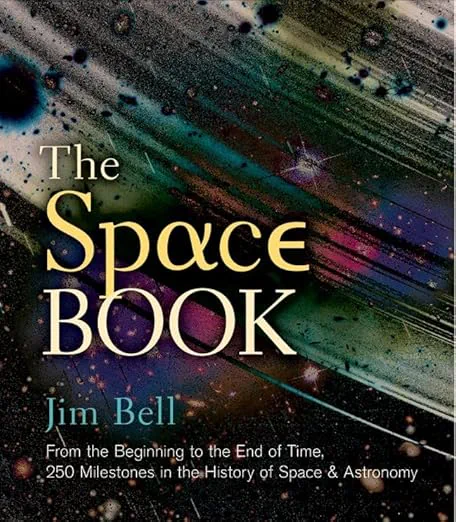
The Space Book: From the Beginning to the End of Time, 250 Milestones in the History of Space & Astronomy
2013
Collection
More in this collection
Continue exploring
Paths out of this episode
Stronger next moves anchored to this specific broadcast.