Garreau outlines three scenarios for humanity's future. The heaven scenario envisions conquering disease, aging, and death through exponential progress. The hell scenario warns that these same tools in the wrong hands could end civilization, citing the Australian mousepox experiment where one genetic tweak created a virus fatal to every lab mouse. The prevail scenario suggests human social innovation can keep pace with technological change, as the printing press once led to the Renaissance and democracy.
The conversation covers DARPA-funded research including a telekinetic monkey at Duke University controlling a robotic arm six hundred miles away using brain signals, memory pills expected within three years, and military programs to burn body fat at will. Art raises concerns about blurring the line between human and machine, while Garreau argues that humanity has historically adapted just fast enough to survive its own inventions.
Key Moments
The telekinetic monkey controlling a robotic arm 600 miles away: Garreau describes the Duke neuroscience experiment: a monkey was wired so that simply thinking about playing a video game moved a cursor and hit a flashing light. The signal was then piped over the internet 600 miles to a robotic arm at MIT, which danced in time with the monkey's intentions-effectively a telekinetic primate.
DARPA's real reason: a father's quest to make his daughter walk: Garreau exposes the human story behind DARPA's mind-machine interface program: Defense Sciences Office director Michael Goldblatt has a daughter, Gina Marie, with cerebral palsy, and is openly spending hundreds of millions of taxpayer dollars on neural-control research because, theoretically, the same machinery that lets thought fly an F-22 could one day live in his daughter's legs and let her walk.
Heaven scenario: the first 150-year-old is already alive: Garreau lays out his Heaven scenario, with Ray Kurzweil as poster child: if technology advances faster than you age, lifespans of thousands of years are conceivable. He cites a real wager among sober scientists at the National Institute on Aging that the first person to live robustly to age 150 has already been born.
Hell scenario: the Australian mousepox accident: Illustrating Bill Joy's Hell scenario, Garreau recounts how Australian geneticists trying to engineer a mouse contraceptive accidentally created a 100% lethal mousepox virus, killing every mouse in the lab-then published the recipe online. Mousepox is harmless to humans but a close cousin of smallpox; advocates of the Hell scenario foresee humanity wiping itself out within 25 years.
Prevail: two curves racing each other: Garreau pitches his preferred Prevail scenario: not a middle ground between Heaven and Hell, but the bet that human responses-new institutions, networks, problem-solving-can rise on an exponential curve fast enough to keep pace with the exponential curve of technological challenge. History shows we have done it before, just barely fast enough.
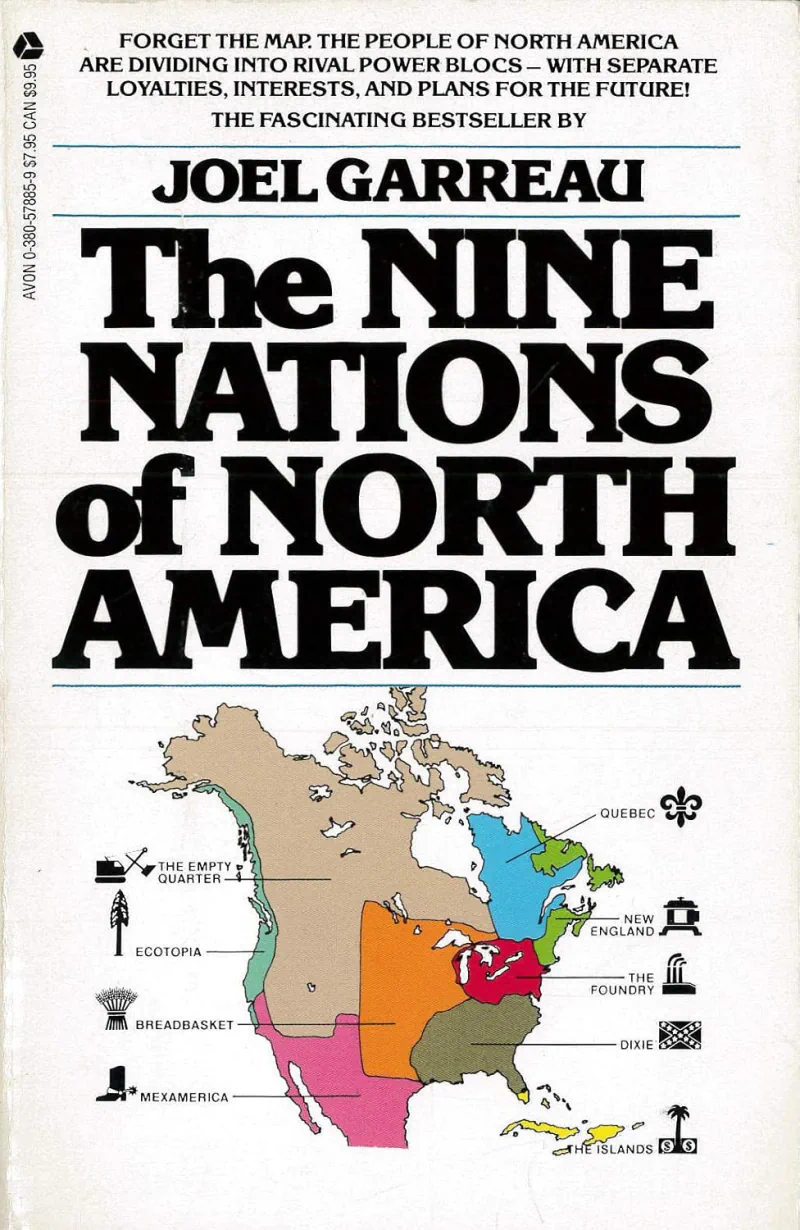
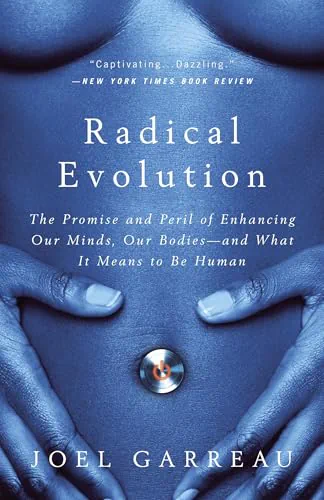
Books by This Guest
Selected titles from the guest bibliography. Use them as context for this appearance, not required listening.