0:00 / 0:00
Art Bell welcomes Jim Elvidge, who holds a master's degree in electrical engineering from Cornell, to explore the theory that our reality may be a digital construct. Elvidge outlines philosopher Nick Bostrom's simulation argument, positing that if civilizations eventually create simulations indistinguishable from reality, the odds heavily favor us already being inside one. He presents evidence ranging from the fine-tuned physical constants of the universe to the digital nature of quantum mechanics.
The discussion examines how matter itself may be nothing more than data, with each successive era of physics revealing that solid material is overwhelmingly empty space. Elvidge explains how paranormal phenomena, precognition, and the Mandela Effect could function as features or glitches within a digital system. He argues that consciousness is primary rather than emergent, citing near-death experiences and out-of-body experiences as evidence that awareness exists independent of the brain.
Art and Elvidge consider the ethical implications of humanity eventually creating its own simulated worlds with conscious beings inside them. They discuss whether free will can exist within a programmed reality, how the delayed choice quantum eraser experiment suggests retrocausality, and whether the universe contains a retrievable record of past events that remote viewers may be accessing.
The discussion examines how matter itself may be nothing more than data, with each successive era of physics revealing that solid material is overwhelmingly empty space. Elvidge explains how paranormal phenomena, precognition, and the Mandela Effect could function as features or glitches within a digital system. He argues that consciousness is primary rather than emergent, citing near-death experiences and out-of-body experiences as evidence that awareness exists independent of the brain.
Art and Elvidge consider the ethical implications of humanity eventually creating its own simulated worlds with conscious beings inside them. They discuss whether free will can exist within a programmed reality, how the delayed choice quantum eraser experiment suggests retrocausality, and whether the universe contains a retrievable record of past events that remote viewers may be accessing.
Key Moments
Could reality be simulated?: Art opens the core question: we could be living in a computer simulation and might not know it.
Bostrom's simulation argument: Elvidge introduces Nick Bostrom's simulation argument and its three possibilities.
Global consciousness and precognition odds: Elvidge points to the Global Consciousness Project and precognition studies as evidence for mind-linked anomalies.
Mandela Effect as system clue: The Mandela Effect enters as a possible clue that reality may not be fixed in the way we assume.
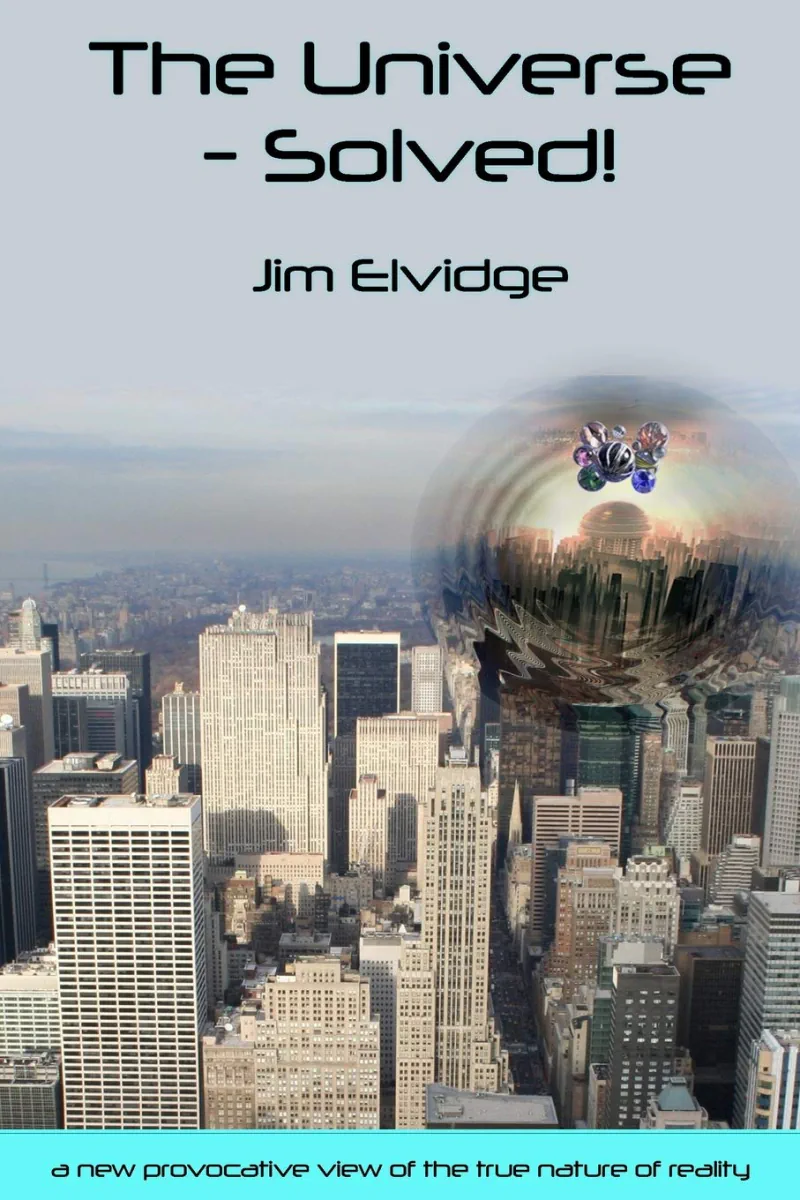
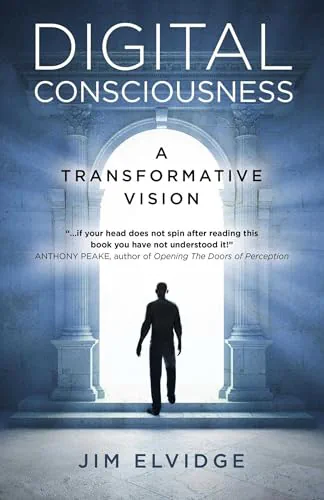
Books by This Guest
Selected titles from the guest bibliography. Use them as context for this appearance, not required listening.
Continue exploring
Paths out of this episode
A stronger next move anchored to this specific broadcast.