
May 28, 2002: Mars Update: Water - Richard C. Hoagland | Antigravity Propulsion Systems - James Cox
In the second half of the program, James Cox, a 58-year-old Vietnam veteran and former TRW and General Dynamics systems engineer, describes his work on a backpack personal lifter based on what he calls the Gravito Inertial Lift System. Cox claims his device uses counter-rotating unbalanced masses and centrifugal force to generate vertical thrust. In static tests with 150 pounds of concrete blocks on a bathroom scale, he reports a 60-pound weight reduction at only 600 RPM, projecting full human lift at around 3,000 RPM.
Cox traces his inspiration to Norman Dean's 1958 oscillator experiments and explains how the Coriolis force creates a time lag between action and reaction forces, producing net directional thrust. He estimates a fully operational backpack could achieve speeds of 60 miles per hour with hours of flight time, all for roughly $100,000 in development funding.
Key Moments
Hoagland: Mars Odyssey reveals enough water to flood the planet: Richard Hoagland walks Art through NASA's 2001 Mars Odyssey neutron map, explaining that deep blue regions in the polar caps imply up to 50% water ice in the upper meter of soil and that Dr. Boynton concedes the ice could extend a mile down.
Mars now 100x cheaper because of in-situ fuel: Hoagland argues a manned Mars mission is now inevitable and a hundred times cheaper because crews can melt the ice, electrolyze it into liquid hydrogen and oxygen for return propellant, and breathe the oxygen, eliminating the need to carry round-trip fuel.
Bush manned-Mars announcement allegedly held back: Hoagland claims Bush administration sources told him before the first Odyssey press conference that George W. Bush planned a manned Mars announcement that summer, and that NASA was deliberately downplaying the water findings to avoid leaks that would torpedo the rollout.
Cox on why the Dean Drive was buried: James Cox explains that Norman Dean's 1958 antigravity oscillator was ignored because Kennedy had already committed to Werner von Braun's Saturn V to reach the moon, and a working Dean Drive would have exposed that decision as foolish.
Cox: Coriolis loophole enables 1G flight to Mars in a week: Cox claims his oscillator exploits a Coriolis-induced time lag between action and reaction, breaking corollary four of Newton's laws and enabling continuous 1G acceleration that could put a craft in Mars orbit in roughly six days.
Preserved source
From the original ArtBell.com archive
The 2003 commemorative archive preserves the contemporary listing for this broadcast. Links and descriptions reflect the original site and may be outdated.
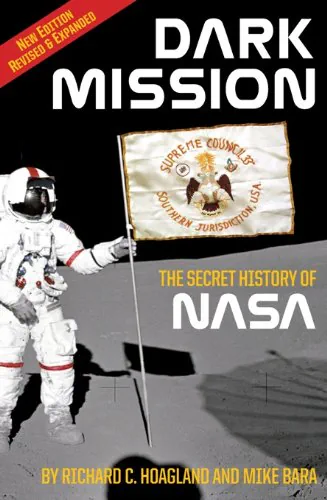
View the original program listingBooks by This Guest
Selected titles from the guest bibliography. Use them as context for this appearance, not required listening.

Continue exploring
Paths out of this episode
A stronger next move anchored to this specific broadcast.