
May 16, 2001: Remote Viewing - Russell Targ & Paul H. Smith
Targ and Smith explain how remote viewing works through non-local consciousness, describing how trained viewers can perceive distant targets using only random number coordinates. They discuss the program's real intelligence successes, including descriptions of Soviet weapons factories verified by satellite photography and a Congressional investigation that endorsed continuing the work. The pair also addresses precognition, sharing personal stories of psychic warnings that saved lives and describing laboratory experiments proving physiological responses to future events.
The conversation turns to practical applications, including their success using associative remote viewing to predict silver futures markets. They discuss why the program was officially shut down despite its effectiveness, the 98 percent of records that remain classified, and the physics of non-locality that may explain how consciousness transcends space and time.
Key Moments
Pat Price nails the Soviet weapons site: Targ explains the program was born from a single demonstration: the CIA handed over latitude/longitude coordinates of a secret target, and psychic Pat Price drew the exterior and the inside of a Soviet Siberian weapons factory accurately enough that satellite photos later confirmed it. The CIA's response: 'whatever you're doing, we want it.'
It worked - that's why it ran 20 years: Pushed by Art on the Ted Koppel-era cover story that the program ended because remote viewing didn't work, Targ flatly contradicts the official line: no government program survives 20 years if it fails. He says it was wound down only because 'our traditional enemy went away.'
Time is no harder than distance: Targ states that SRI's data showed it is 'no harder to look into the near future than it is to look into the present,' and the past is just as accessible as the present. He frames this through Henry Stapp's claim that non-locality may be the most important discovery in all of science.
Mandela memories - an early Mandela Effect on-air: Art recounts that after one caller mentioned remembering Nelson Mandela having died in prison, hundreds of listeners emailed saying they shared the same vague memory of a different timeline - years before 'the Mandela Effect' was named. He raises it here as a real example of past possibly being changed without anyone noticing.
Art's premonition that saved his car: Art shares a personal precognitive experience: sitting at home watching the news, waves of dread suddenly washed over him; he opened the curtain to check his parked car and watched a neighbor reverse straight into it. Targ frames it as the future affecting the past - a precognitive event causing an earlier reaction.
Preserved source
From the original ArtBell.com archive
The 2003 commemorative archive preserves the contemporary listing for this broadcast. Links and descriptions reflect the original site and may be outdated.
View the original program listingBooks by These Guests
Selected titles from the guest bibliography. Use them as context for this appearance, not required listening.
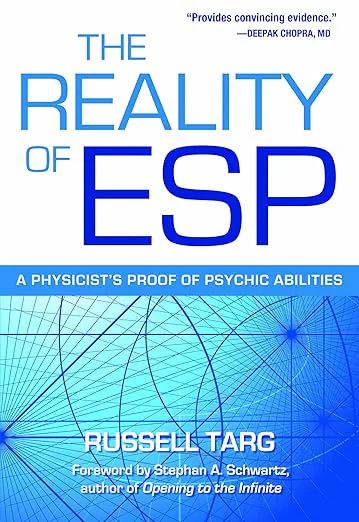
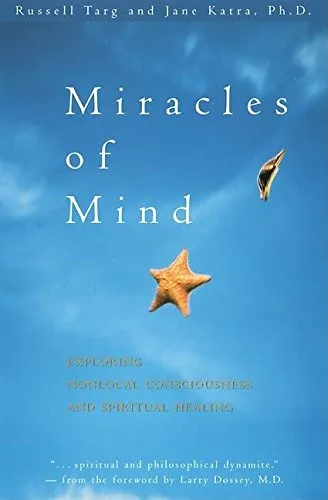
Miracles of Mind: Exploring Nonlocal Consciousness and Spiritual Healing
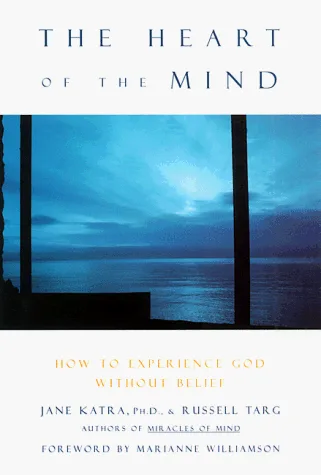
The Heart of the Mind: How to Know God Without Belief
Continue exploring
Paths out of this episode
A stronger next move anchored to this specific broadcast.