May 14, 2005: Biology, Belief, and Consciousness - Dr. Bruce Lipton
The conversation covers the placebo and nocebo effects, with Lipton arguing that beliefs and perceptions directly alter biology through a mechanism called epigenetic control. He reveals that when he destroyed the DNA in cloned cells, they continued living and responding normally, proving the nucleus functions as the cell's reproductive organ rather than its brain. Every cell, he maintains, possesses its own intelligence through its membrane.
Lipton connects these findings to broader questions about consciousness and identity, explaining that self-receptors on cell surfaces act as antennas downloading an external signal. He suggests this explains why organ transplant recipients sometimes acquire personality traits of their donors, as the donor's broadcast continues playing through the transplanted tissue.
Key Moments
Stem cells overturn genetic determinism: Lipton describes the late-night realization, after 15 years cloning stem cells, that identical cells changed identity and health based on the culture environment, not their genes.
Placebo and nocebo as the same mechanism: Lipton defines the placebo effect as healing through belief and the equal-and-opposite nocebo effect, where a doctor's terminal diagnosis itself can promote the outcome.
Drug companies want placebo studies removed: Lipton claims drug companies are trying to wean placebo data out of the literature because, citing psychologist Irving Kirsch's FOIA lawsuit, Prozac and Zoloft test no better than sugar pills.
The cell membrane, not the nucleus, is the brain: Lipton argues genes are not turned on or off by themselves; the cell's skin or membrane reads the outside and inside environments and decides which genes to read, making the membrane the true cellular brain.
95% of cancer is response to environment, not heredity: Lipton states that 95% of cancers do not have a hereditary linkage and arise from response to environment, citing an American Cancer Society statement that over 60% of cancers are avoidable through lifestyle and diet.
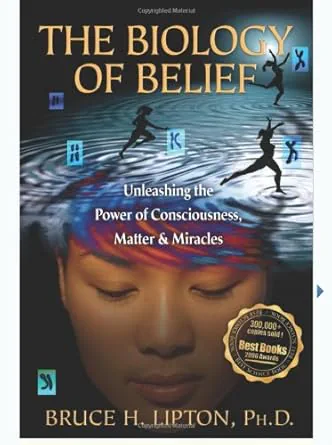
Books by This Guest
Selected titles from the guest bibliography. Use them as context for this appearance, not required listening.