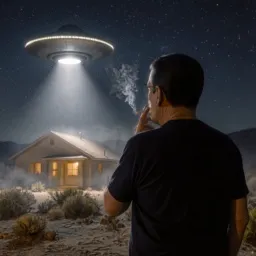
The discussion turns to optical SETI, a newer approach using telescopes to detect laser pulses from other civilizations. Shostak explains that a powerful laser could momentarily outshine our sun as seen from a nearby star, making detection possible with modest equipment. He also previews the Allen Telescope Array, a planned instrument that could observe stars 100 to 1,000 times faster than current methods, potentially surveying millions of star systems.
Art and Shostak debate the probability that advanced civilizations may have evolved beyond biology into machine intelligence, raising the possibility that first contact could be with artificial minds rather than biological beings. They also spar over whether the government would suppress a confirmed detection, with Art arguing secrecy would prevail and Shostak maintaining transparency.
Key Moments
How SETI handles a hit: Shostak explains the verification process: a candidate signal at Arecibo is relayed to Jodrell Bank in England, then the dish is moved off-target to confirm the signal disappears, ruling out satellites.
Optical SETI and the Livermore laser: Shostak introduces optical SETI: the Lawrence Livermore laser, at a thousand trillion watts for a trillionth of a second, would momentarily appear a thousand times brighter than the Sun when seen from a nearby star.
First contact will be machines: Shostak bets a cup of coffee that whatever's on the other end of any first contact won't be soft, squishy protoplasm but a machine intelligence - and machines may regard biological humans the way we regard dolphins or bacteria.
False alarm during a tour: Shostak recounts the recent run where a candidate signal had the control room excited for 15 minutes - while visitors and media stood watching. He notes the 1997 hit arrived as a TV crew walked in.
Detection protocol gentleman's agreement: The post-detection protocol has no force of law: notify all astronomers first (the star is moving), then donors as courtesy, then governments and the public. Donors named: Paul Allen, Gordon Moore, Hewlett, Packard, Barney Oliver.
Preserved source
From the original ArtBell.com archive
The 2003 commemorative archive preserves the contemporary listing for this broadcast. Links and descriptions reflect the original site and may be outdated.
View the original program listingBooks by This Guest
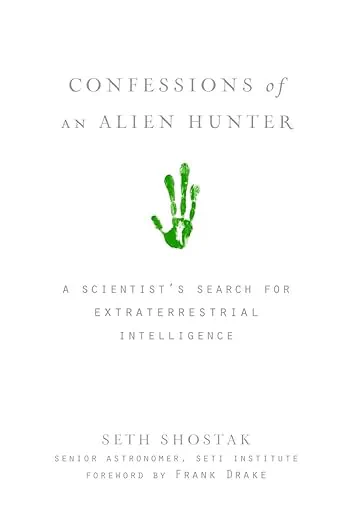
Selected titles from the guest bibliography. Use them as context for this appearance, not required listening.
Continue exploring
Paths out of this episode
A stronger next move anchored to this specific broadcast.