Hoagland presents evidence that NASA is deliberately degrading Galileo images of Jupiter's moons through lossy JPEG compression, preventing independent analysis. He connects this to a broader pattern of concealment stretching back to the Viking missions and the Face on Mars. A mysterious personal story involving stolen NASA materials recovered by practitioners of lunar magic rituals leads Hoagland toward secret societies as the hidden hand behind space program secrecy.
The discussion builds toward Hoagland's most provocative assertion, that Hale-Bopp's orbital characteristics suggest deliberate placement rather than random cosmic chance. He ties together Finnish anti-gravity experiments, shuttle video anomalies, and the concept of a trans-governmental group operating advanced technology far beyond what the public has been shown.
Key Moments
Both Mir oxygen electrolysis units have failed: Hoagland walks through Mir's three oxygen sources and reveals that both electrolysis generators - the primary system that splits water using solar power - have broken down, and that the United States is quietly trying to manufacture replacement parts because the post-Soviet Russian space program no longer can.
Why fires behave differently in zero-G: Hoagland explains that the recent Mir fire could not have been a runaway blaze like the Apollo 1 ground fire because in orbit there is no convection - combustion byproducts cannot move out of the way and the flame smothers itself - so the danger is not the fire itself but toxic outgassing in a sealed environment.
Tampere superconductor anti-gravity replication: Hoagland describes the Tampere University experiments by a Finnish physicist using superconducting spinning discs that produced a measurable, replicable weight loss of about one percent, building on a 1992 Physica C paper, and notes that NASA Huntsville has announced plans to replicate it.
STS48 video and the one-minute live-feed delay: Hoagland points to the September 1991 STS48 shuttle downlink showing objects that NASA called ice crystals but that independent analyses by Kasher at Nebraska and others called spacecraft using anti-gravity, and notes that NASA shifted from live to nearly one-minute delayed shuttle video afterward, while Apollo broadcast unedited audio across a quarter million miles.
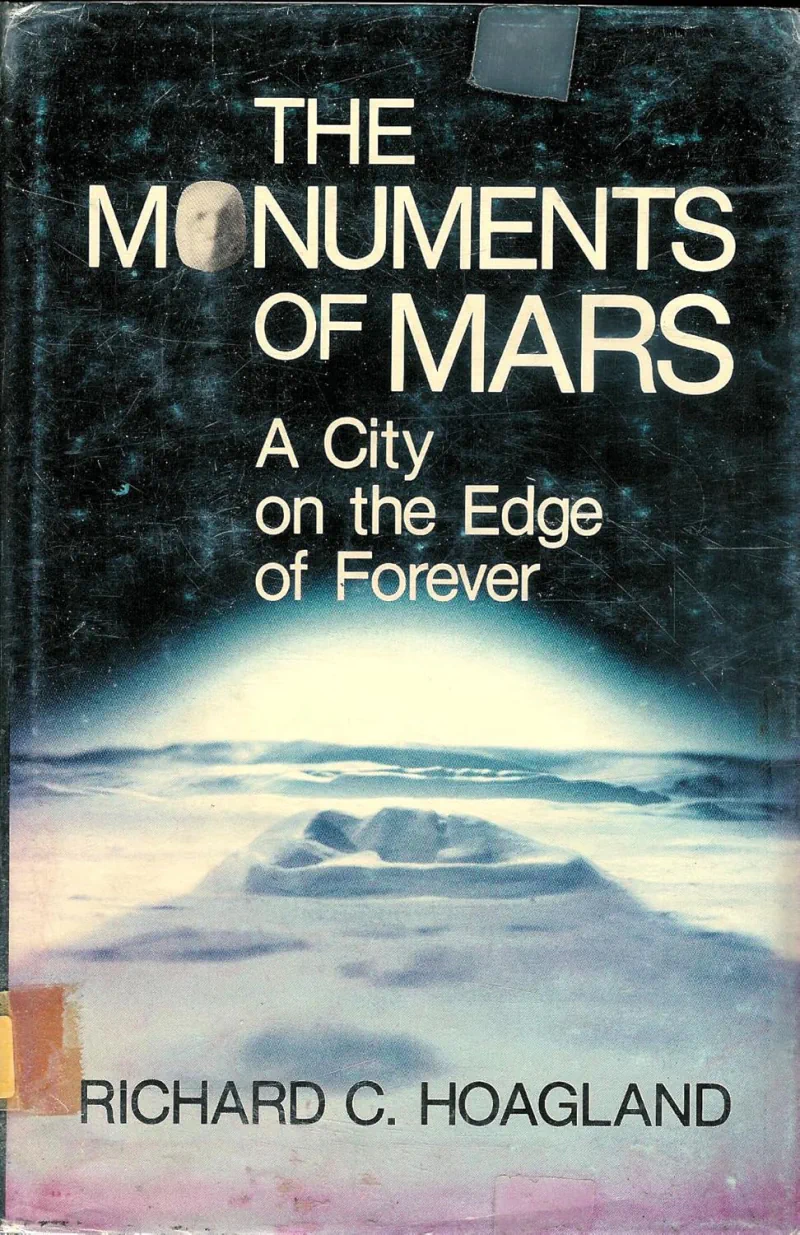
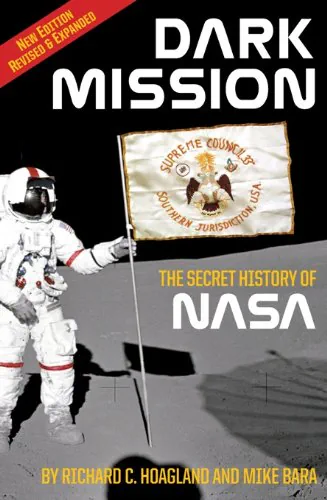
Books by This Guest
Selected titles from the guest bibliography. Use them as context for this appearance, not required listening.
Continue exploring
Paths out of this episode
A stronger next move anchored to this specific broadcast.