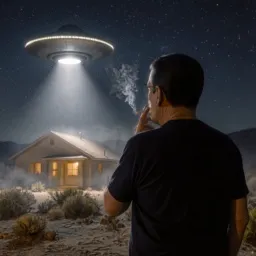
The conversation takes a provocative turn as Hancock reveals that two wealthy individuals have secured exclusive access to explore a hidden chamber beneath the Sphinx and a sealed door inside the Great Pyramid. He alleges secrecy, corruption, and plans for a staged television spectacle rather than transparent scientific inquiry. Hancock describes being asked to sign a secrecy agreement and condemn fellow researcher John Anthony West as conditions for participation, both of which he refused.
Hancock presents the ancient Egyptian concept of the Duat, a celestial region through which souls journey after death, arguing that the Giza monuments were built as initiation sites encoding knowledge from a predecessor civilization destroyed by cataclysm. His call for an independent public inquiry into what lies hidden beneath these monuments remains one of the most compelling challenges to mainstream archaeology ever aired on late night radio.
Key Moments
Great Pyramid aligned to true north better than Greenwich: Hancock argues the Great Pyramid is aligned to true north within 1/360th of a degree, more accurate than the Greenwich Observatory meridian building (1/960th of a degree off), proving its builders were master astronomers.
Three pyramids mirror Orion's belt as it appeared in 10,500 BC: Hancock states the three Giza pyramids map the pattern of Orion's belt on the ground exactly as those stars appeared in the sky in 10,500 BC, and the Sphinx faces the spring-equinox sunrise in Leo of that same epoch.
Schoch's water-erosion dating and the Sphinx chamber: Hancock recounts geologist Robert Schoch and John Anthony West showing the Sphinx's weathering points to thousands of years of rainfall, dating it to the end of the last ice age, and seismic surveys finding a rectangular chamber 25 feet beneath its paws before the team was expelled.
Gantenbrink's robot, the door with metal handles, and the suppression: Hancock describes Rudolf Gantenbrink's 1993 robot exploration of the Queen's Chamber southern shaft, the discovery of a small door with two metal handles after a 200-foot journey, and Gantenbrink being barred from returning, with two multi-millionaires now controlling secret access.
Books by This Guest
Selected titles from the guest bibliography. Use them as context for this appearance, not required listening.
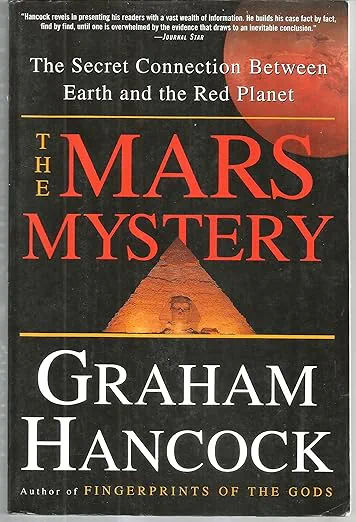
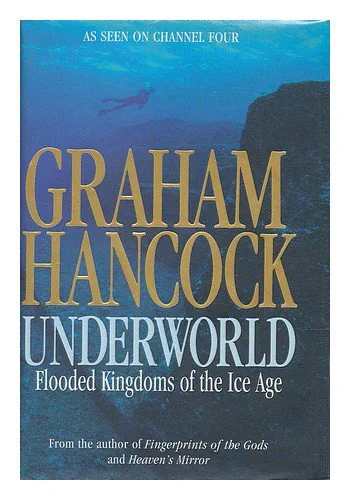
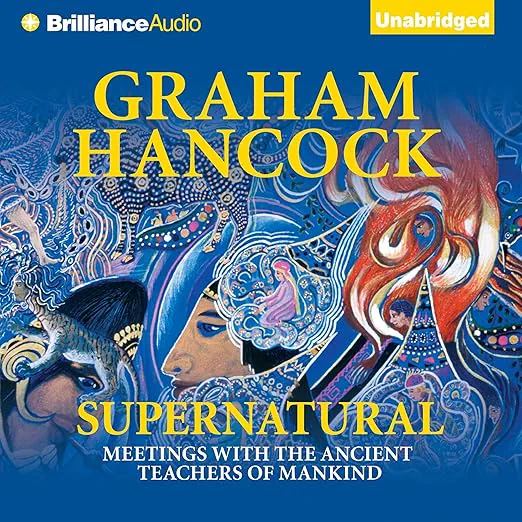
Collection
More in this collection
Continue exploring
Paths out of this episode
Stronger next moves anchored to this specific broadcast.