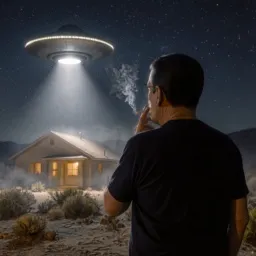
June 17, 2007: UFO Update - James Gilliland | Noise, Law, and Technology - Dr. Bart Kosko
Later, professor Bart Kosko joins to discuss noise law and emerging technology. Kosko examines how legal frameworks struggle to keep pace with advances in surveillance, digital privacy, and signal processing. The conversation touches on the growing tension between government monitoring capabilities and individual rights, with Kosko offering a mathematician's perspective on where technology is headed.
Throughout the program, Art reflects on the decline of bird populations across America, citing Audubon Society data showing a 68 percent average drop in 20 common species over 40 years. He connects this to broader environmental concerns including the ongoing honeybee colony collapse and accelerating climate change, noting that such dramatic shifts measured within a single human lifetime should alarm everyone.
Key Moments
Gilliland's face-to-face with Pleiadian females: Gilliland describes a face-to-face encounter with the Pleiadians - beautiful, supermodel-like beings who appear female on first contact (because a powerful male presence would make people 'run for their gun') and communicate telepathically.
Why ETs avoid the White House lawn: Gilliland explains the aliens won't land in front of governments because the military would simply try to capture and back-engineer their craft. After early attempts at government contact failed - leaders lacked the integrity needed - they shifted to working with common people.
Stanley Meyer and the suppression of free-energy inventors: Asked why advanced beings don't simply hand over technology, Gilliland names Stanley Meyer - the inventor who claimed to split water on demand to power a car - as someone found dead the day after meeting with the military.
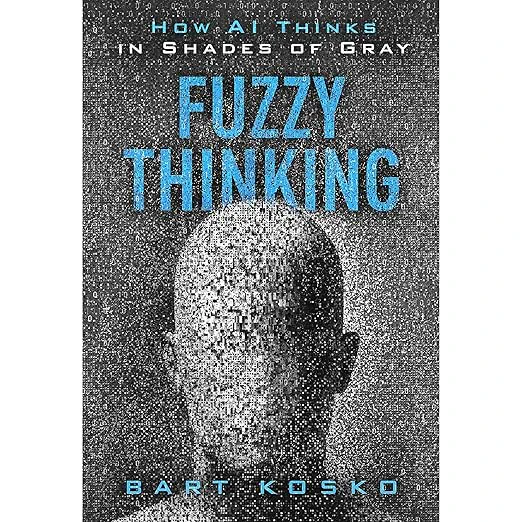
Stochastic resonance: when noise helps the system: Kosko explains the central thesis of his book: contrary to the long war on noise, neural-network and brain research in the 1980s found that adding a little noise actually improves how threshold systems perform - all the way down to nanotechnology.
The 'restaurant effect' - runaway noise feedback: Kosko names the phenomenon where conversations get progressively louder: as ambient noise rises, each pair raises their voice to maintain a signal-to-noise ratio, which in turn raises the noise floor for everyone - a runaway loop that ends only when people leave.
Books by These Guests
Selected titles from the guest bibliography. Use them as context for this appearance, not required listening.



Continue exploring
Paths out of this episode
A stronger next move anchored to this specific broadcast.