
The greater danger comes in August 1999, when Cassini is scheduled to fly back past Earth at 42,300 miles per hour, passing just a few hundred miles above the surface to gain speed for its journey to Saturn. NASA's own environmental impact statement acknowledges that a re-entry accident could release plutonium dust affecting approximately five billion people. Independent scientists project potential fatalities ranging from hundreds of thousands to tens of millions, far exceeding NASA's estimate of 2,300 cancer deaths.
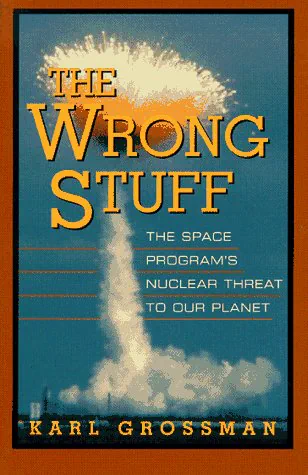
Grossman argues the mission could use high-efficiency solar cells developed by the European Space Agency instead. He questions why NASA insists on plutonium when ESA plans to send its Rosetta probe beyond Jupiter on solar power alone.
Key Moments
Titan IV failure rate and 72.3 pounds of plutonium-238: Grossman cites the 1993 Vandenberg Titan IV failure 101 seconds after launch (one of nineteen, ~5% failure rate) and quantifies Cassini's payload at 72.3 pounds of plutonium-238 - the most ever flown.
Earth flyby trajectory: 312-500 miles, 42,300 mph: Grossman details NASA's Venus-Venus-Earth-Jupiter gravity-assist plan: Cassini will return in August 1999 at 42,300 mph and pass 300-500 miles above Earth, with the atmosphere only 75 miles deep.
Casualty estimates: 2,300 vs Gofman's million, Sternglass's 10-40M: Grossman contrasts NASA's projection of 2,300 fatal cancers with independent scientists: Dr. John Gofman (UC, Manhattan Project) at 900,000-1,000,000 deaths and Dr. Ernest Sternglass (Pittsburgh) at 10-40 million.
Preserved source
From the original ArtBell.com archive
The 2003 commemorative archive preserves the contemporary listing for this broadcast. Links and descriptions reflect the original site and may be outdated.
View the original program listingBooks by This Guest
Selected titles from the guest bibliography. Use them as context for this appearance, not required listening.

Continue exploring
Paths out of this episode
A stronger next move anchored to this specific broadcast.