
The conversation ranges widely, from a spectacular new crop circle at Wiltshire, England, featuring three Julia sets and 194 circles, to physicist Bruce De Palma's rotating machinery experiments that showed lawn grass growing faster over spinning systems. Hoagland connects these findings to hyperdimensional physics and scalar electromagnetics, arguing that the established physics taught in universities is incomplete. He describes plans to launch citizen science experiments through his Enterprise Mission website, inviting people worldwide to replicate De Palma's grass-growing results.
Art and Hoagland also discuss suspicious interference with their websites, the suppression of unconventional physics research, and the broader thesis that humanity shares a genetic heritage with beings elsewhere in the solar system. Hoagland frames the internet as the great equalizer that could finally break through decades of scientific gatekeeping.
Key Moments
Hoagland's plagiarism claim against the Cornell Europa idea: Hoagland opens by claiming priority on the idea of Europa as a possible harbor for extraterrestrial life. He says he originated and published the proposal in 1980 in Star and Sky magazine, that Arthur C. Clarke credited him in the novel of 2010, and that a NASA-contracted Cornell professor has now nakedly plagiarized the work.
The mile-long triple-Julia-set crop formation at Wiltshire: Hoagland describes a brand-new July 29 formation in Wiltshire, England - three Julia sets combined with 194 circles, roughly a mile long. He frames the recent crop formations as increasingly mathematical, geometrical, hyperdimensional artifacts pointing at the Mandelbrot set and a coming change in physics.
De Palma, spinning gyroscopes, and the silenced gravity experiment: Hoagland recounts Bruce De Palma's experiments showing that spinning gyroscopes thrown in a gravitational field travel differently than non-spinning ones - a result inconsistent with Newtonian mechanics. He says Polaroid's Edwin Land and MIT's Dr. Edgerton (founder of EG&G, the firm tied to Bob Lazar's Area 51 story) personally counseled De Palma to stop pursuing the work.
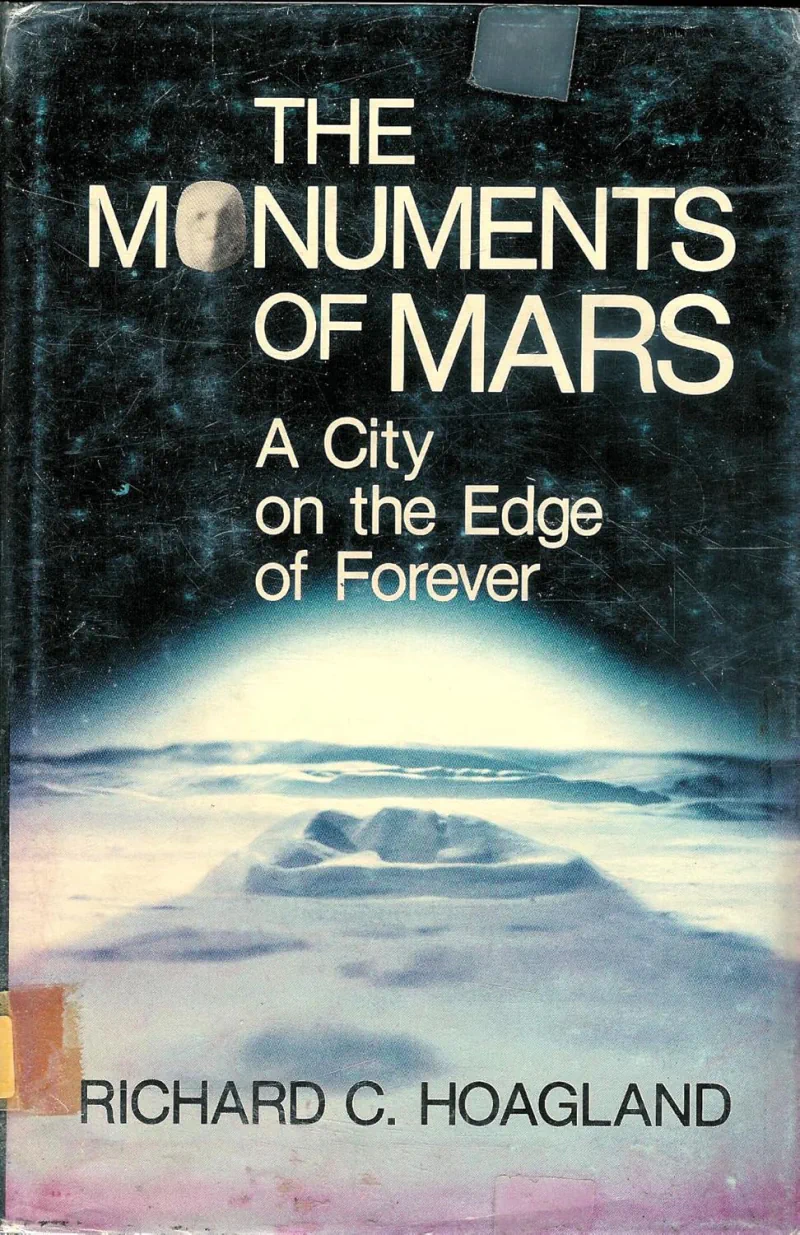
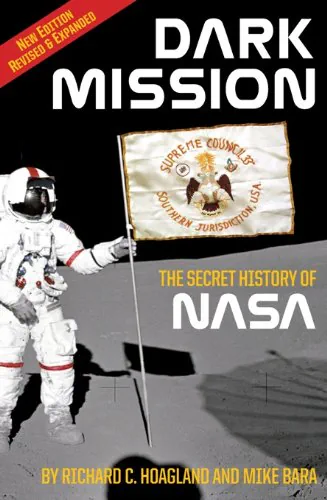
Books by This Guest
Selected titles from the guest bibliography. Use them as context for this appearance, not required listening.
Continue exploring
Paths out of this episode
A stronger next move anchored to this specific broadcast.