
July 25, 1997: Great Pyramid - Richard C. Hoagland & Tom Danley | Mars Imagery - Richard C. Hoagland, Marv Czarnik, & Ken Franklin
The conversation shifts to Mars as NASA veterans Czarnik and Johnston join Hoagland to examine growing anomalies around the Pathfinder mission. They challenge official explanations for a communications blackout on July 20th, arguing that experienced mission controllers could not accidentally miss a contact window by ten minutes. The group questions why the rover''s published operational range appears deliberately understated.
Hoagland presents his theory that Pathfinder landed at coordinates encoding hyperdimensional physics constants, claiming a super-resolution image of the right Twin Peak, briefly posted then removed by NASA, reveals the exposed interior of a buried pyramid. He calls on listeners to preserve the image and help verify the discovery.
Key Moments
Tom Danley describes the secret tunnel above the King's Chamber: NASA acoustic consultant Tom Danley describes climbing into Davidson's Chamber above the King's Chamber, finding a freshly chiseled tunnel running west alongside the granite wall, with two rooms hewn out along its length and fresh chisel marks visible in the limestone.
Bags of limestone hidden one chamber up: Danley recounts climbing one level higher and finding a large pile of burlap bags filled with limestone tailings - hauled up against gravity into the next upper chamber rather than carried out down the Grand Gallery, evidence the digging is being deliberately concealed.
Danley's acoustic measurement finds a chamber behind the Gantenbrink door: Danley describes using sound-based distance measurement to probe the southern Queen's Chamber air shaft, getting two strong reflections - one consistent with the Gantenbrink door at ~185 feet and a second at 212 feet, indicating roughly 30 feet of open space behind the door.
Pathfinder landed within half a mile of an apparent pyramid: Hoagland argues that NASA targeted Pathfinder's landing site to put the rover within half a mile of one of the Twin Peaks, which on the now-vanished Ames super-resolution image shows what looks like the top of a stepped pyramid, and that the rover has the capability to drive into the debris apron and test the hypothesis on live television.
Geologist Ron Nix: the right peak looks like a stepped pyramid: Geologist Ron Nix, given the Pathfinder twin-peaks photo blind, tells Hoagland the right peak resembles a Mexican stepped pyramid - like the Pyramid of the Sun - with what appears to be three terraces and a central ramp, and notes the two peaks are anomalously dissimilar for a single floodplain.
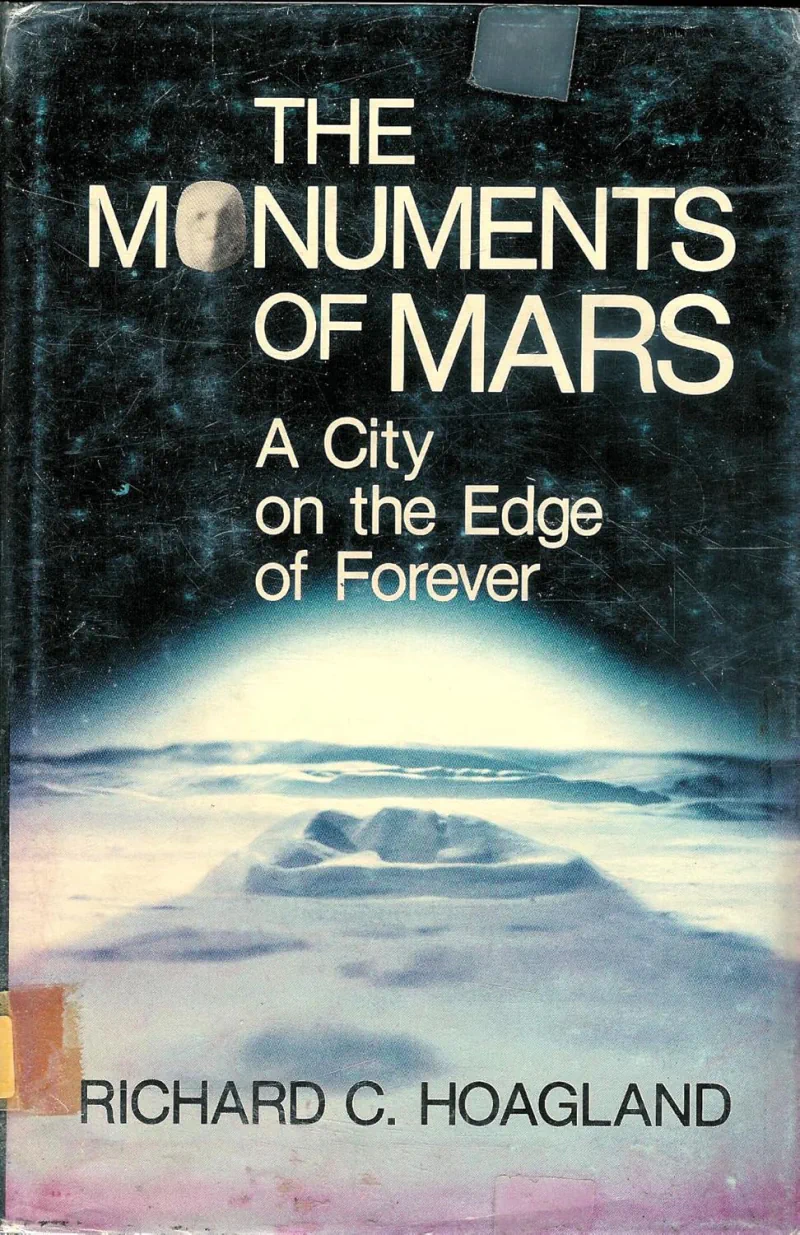
Books by This Guest
Selected titles from the guest bibliography. Use them as context for this appearance, not required listening.

Continue exploring
Paths out of this episode
A stronger next move anchored to this specific broadcast.