
The conversation shifts to Hoagland''s central thesis that energy output across the solar system is governed by angular momentum and planetary alignments rather than conventional thermodynamics. He presents evidence that Jupiter, Saturn, Uranus, and Neptune all radiate more energy than they receive from the sun, and that their luminosities plot on a straight line dependent solely on total spin energy. He predicts these luminosities will change over short timescales, a testable claim no one at NASA has yet investigated.
Hoagland connects record-breaking heat waves, rapid El Nino-to-La Nina shifts, and Antarctic ice core data showing near-instantaneous climate reversals to his model. He argues that ancient pyramids may have functioned as hyperdimensional transducers on a global grid. The show also highlights Arizona politician Frances Barwood''s campaign and her courage in publicly demanding answers about the Phoenix Lights.
Key Moments
Why Japan launched Mars probe five months early: Hoagland argues the Japanese Nozomi Mars probe was launched five months ahead of its window and parked in Earth orbit because Tokyo may believe a major earthquake could destroy its launch site before December.
NASA cooked the Cydonia images: Hoagland's optical engineer source explains that modern CCD pixel variation is so low the lined 'fingerprints' on the released Cydonia raw data shouldn't exist - meaning JPL likely overlaid scan artifacts to suppress fine detail.
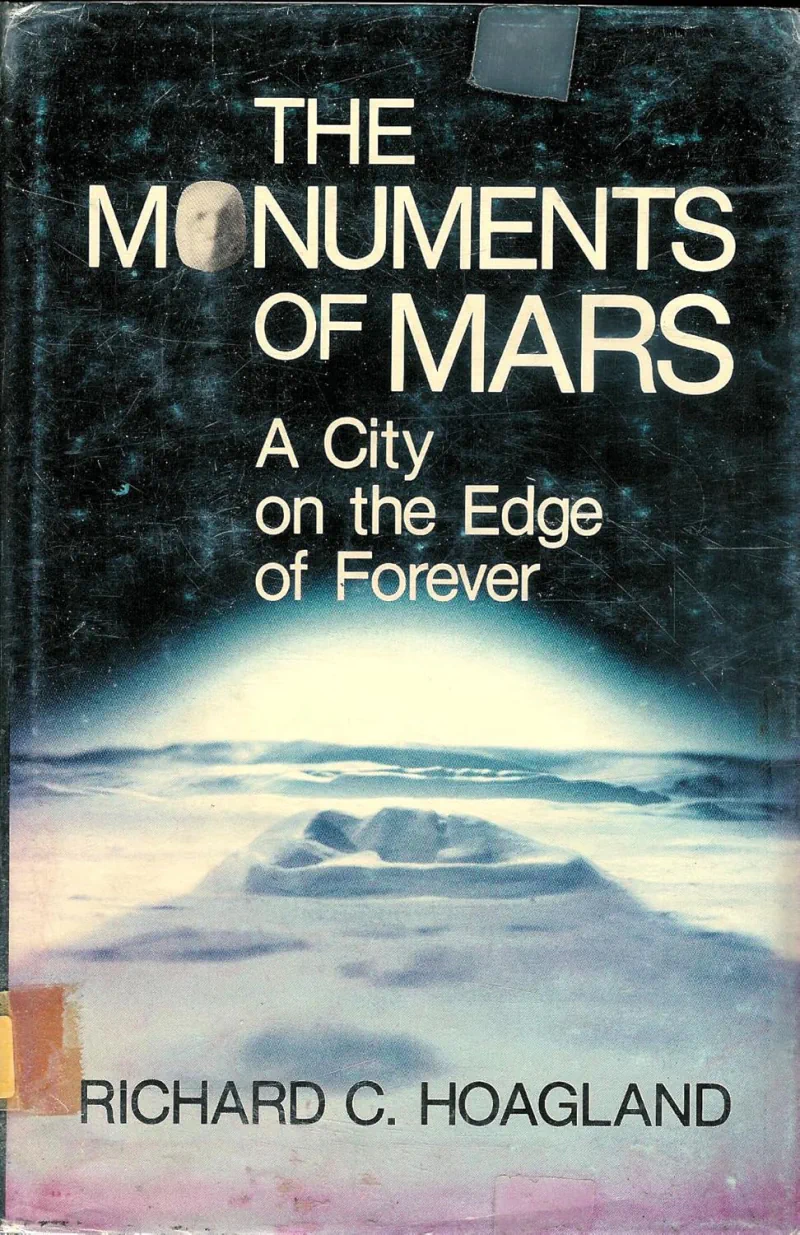
Van Flandern's 10^31 to 1 odds for intelligence at Cydonia: Hoagland reports that Dr. Tom Van Flandern, after the New Mexico seminar, calculated odds of 10 to the 31st power to one in favor of artificial intelligence having built Cydonia on Mars.
Solar system in sudden, simultaneous climate flux: Hoagland argues weather chaos is not just terrestrial fossil-fuel warming - Mars, Titan, and Neptune are also changing, and Greenland and Antarctic ice cores show ice-age switches happening in single years, which his hyperdimensional model explains.
Pyramids as planetary-scale hyperdimensional transducers: Hoagland proposes that the great pyramids and similar ancient megaliths sit on grid-point latitudes and were built by a previous civilization as transducers to control planetary energy flow and prevent earthquakes.
Preserved source
From the original ArtBell.com archive
The 2003 commemorative archive preserves the contemporary listing for this broadcast. Links and descriptions reflect the original site and may be outdated.
View the original program listingBooks by This Guest
Selected titles from the guest bibliography. Use them as context for this appearance, not required listening.
Continue exploring
Paths out of this episode
A stronger next move anchored to this specific broadcast.