The conversation explores nanobacteria, a newly discovered pathogen hundreds of times smaller than conventional bacteria that secretes calcium and may underlie heart disease, kidney stones, and cataracts. Mulhall describes promising early results from treatments that strip the calcium coating and attack these organisms with antibiotics. He then addresses the concept of "gray goo," the theoretical scenario where self-replicating nanomachines consume all matter on Earth, noting both the legitimate danger and the biological counterarguments against it.
Mulhall discusses solar cells made from carbon nanorods that could be spray-painted onto any surface, the possibility of machines surpassing human intelligence by 2030, and how nanotechnology might enable molecular disassembly of incoming asteroids. Art presses him on whether humans are preparing their own evolutionary replacement through these technologies.
Key Moments
Drexler's three prerequisites for molecular nanotechnology: Mulhall lays out Eric Drexler's framework: manipulating individual atoms, building self-replicating molecular machines, and assembly into larger machines, citing DNA as the natural template.
Nanobacteria, calcification, and the diseases of aging: Mulhall describes Finnish researchers' discovery of nano-sized bacteria that secrete calcium and may be the underlying cause of arteriosclerosis, kidney stones, and cataracts, plus an early therapy that strips the calcium coat with antibiotics.
Gray goo and the test tube on the floor: Bell raises the gray goo scenario; Mulhall explains Drexler's original warning, says theoretical replication could consume the world in weeks, then offers Robert Freitas's counter that biological environmental resistance would limit a runaway swarm.
Nanobots, drugs, and the path to superhuman intelligence: Responding to a caller, Mulhall says neurologists already argue that drugs, nanobots, and direct neural connectivity could expand the brain's untapped capacity, and this is one plausible route to superhuman intelligence.
Preserved source
From the original ArtBell.com archive
The 2003 commemorative archive preserves the contemporary listing for this broadcast. Links and descriptions reflect the original site and may be outdated.
View the original program listingBooks by This Guest
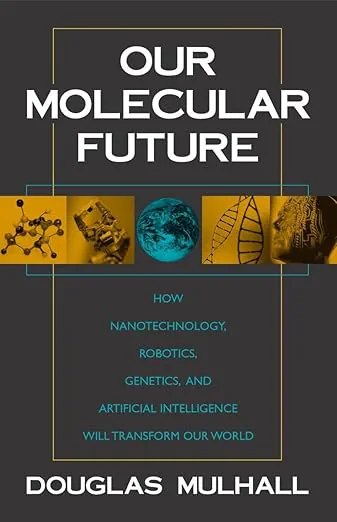
Selected titles from the guest bibliography. Use them as context for this appearance, not required listening.
Continue exploring
Paths out of this episode
A stronger next move anchored to this specific broadcast.