
The conversation centers on published scientific studies showing that human consciousness can affect matter, from single-celled organisms to complex biological systems. McTaggart describes evidence of remote healing, where individuals in one part of the country successfully influenced the health of people thousands of miles away. She details how living beings constantly transmit and receive light, creating an ongoing information exchange that provides a mechanism for intention to work.
Art and Lynne explore the implications of quantum physics for understanding phenomena like spiritual healing and homeopathy. McTaggart shares her findings that directed thought registers across every aspect of a receiver's body, affecting heart rate, brain activity, and skin conductance. The program also features open lines with callers discussing near-death experiences, hollow Earth theories, and the Area 51 caller incident.
Key Moments
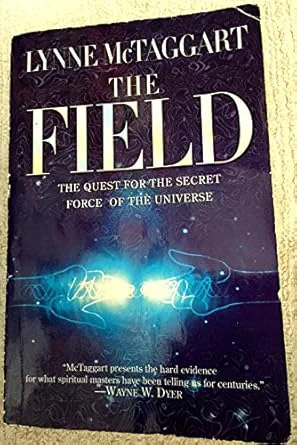
The Field as zero-point web uniting everything: McTaggart introduces 'The Field' as the zero-point quantum field that connects all matter and explains how mind affects matter.
Sham knee surgery and Parkinson's placebo: McTaggart cites studies where sham arthroscopic knee surgery healed patients and Parkinson's sufferers given a sugar pill produced their own dopamine.
Monks enter gamma, not alpha, during intention: EEG studies of Tibetan monks under the Dalai Lama at the University of Wisconsin show their brains speed up to a gamma 'peak attention' state during intention, contradicting the meditation-as-slowdown assumption.
Retroactive intention - praying for the past: McTaggart describes a Lancet-published Israeli sepsis study where prayers offered in 2000 appeared to improve outcomes for patients hospitalized in the early 1990s, plus Helmut Schmidt's REG tape experiments showing intention can shift already-recorded random output.
Bad news as mass intention: Art and McTaggart connect the science of intention to the negativity of daily news, suggesting the constant stream of bad headlines becomes a collective negative intention that worsens what it reports.
Books by This Guest
Selected titles from the guest bibliography. Use them as context for this appearance, not required listening.
Continue exploring
Paths out of this episode
A stronger next move anchored to this specific broadcast.