
In southeast India, Hancock has personally dived on a large horseshoe-shaped structure submerged at 75 feet, dated by sea-level science to approximately 11,500 years ago, the same date Plato gave for the sinking of Atlantis. He also addresses the mysterious structures found 2,200 feet deep off Cuba and speculates that an underwater landslide carried them to such extreme depths.
Hancock argues that 10 million square miles of land submerged by rising sea levels at the end of the Ice Age likely hold the remains of a lost urban civilization. He suggests ancient Indian texts point to a society less focused on material technology and more oriented toward spiritual development, representing a fundamentally different path of human progress.
Key Moments
A higher Ice Age civilization, drowned: Hancock lays out his core thesis: an urban civilization existed deep in the Ice Age and was drowned by rising seas as the glaciers melted, leaving its remains underwater.
Gulf of Cambay sonar discovery: India's National Institute of Ocean Technology, doing a pollution survey with side-scan sonar in May 2001, finds two geometric grid-patterned cities 120 feet down, each about five miles long, parallel along ancient riverbeds.
9,500-year-old artifacts dredged up: The same expedition lowers a mechanical grab over the cities and pulls up more than 2,000 artifacts including pottery, jewelry, fossilized human teeth, bones, a vertebra and a jawbone. Carbon dating on cut wood comes back at 9,500 years old.
Yonaguni dated to Plato's Atlantis: Hancock notes the underwater structure he dived on off Japan was submerged about 11,500 years ago, the same date Plato gives for the submergence of Atlantis.
Why a coastal civilization vanishes: Hancock argues an Ice Age civilization that hugged the warm coasts, the only sensible place to live with frozen interiors, would be selectively wiped out by post-glacial flooding while leaving inland eras intact.
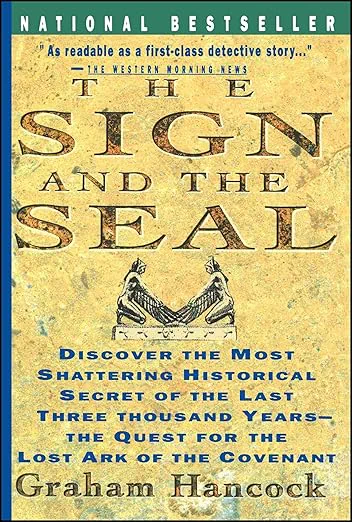
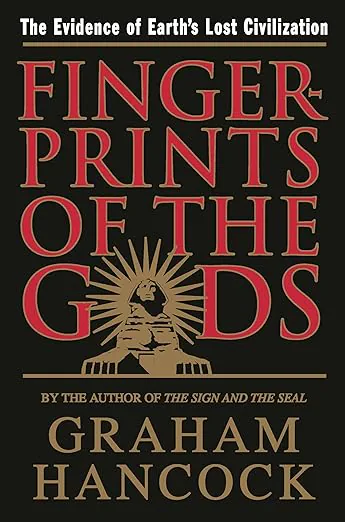
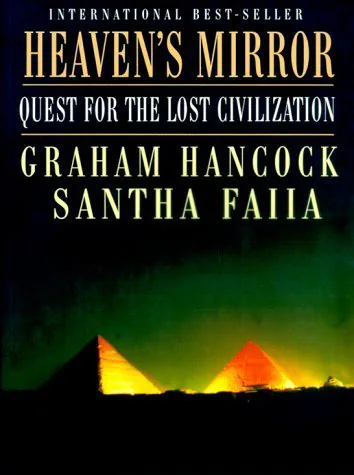
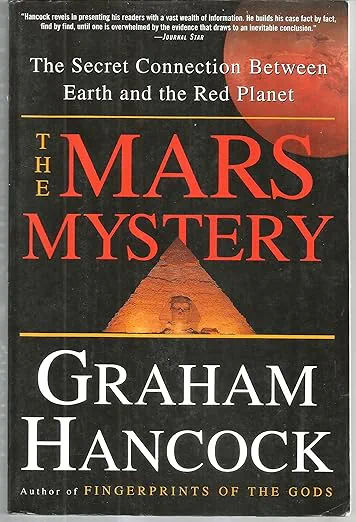
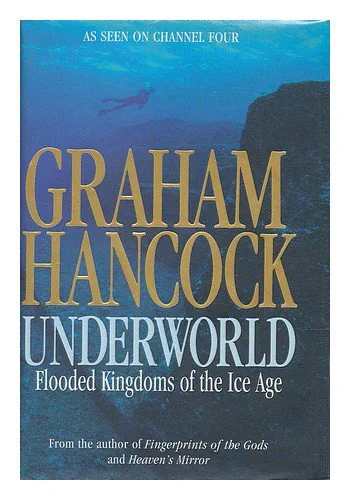
Books by This Guest
Selected titles from the guest bibliography. Use them as context for this appearance, not required listening.
Continue exploring
Paths out of this episode
A stronger next move anchored to this specific broadcast.