
Bloom explores the intersection of science, geopolitics, and Islamic fundamentalism. He discusses the Big Bang and the emergence of intelligence from nothing, arguing that consciousness was implicit in the universe from its origin. He presents an analysis of militant Islam's conflict with non-believers, citing conversations with Muslim friends who estimate that 70 percent of the Islamic population holds pro-militant sympathies. Bloom warns that nuclear terrorism could strike within months to three years.
Bloom proposes that Iranian intelligence manipulated the U.S. into invading Iraq through fabricated weapons intelligence funneled through Ahmed Chalabi. He argues that Iran positioned itself to control Iraq through Shiite religious networks, the only organizational structure Saddam Hussein could not destroy. The discussion touches on the Danish cartoon controversy as a tool for reuniting Sunni and Shiite factions against the West.
Key Moments
The Big Bagel theory of the cosmos: Bloom describes his teenage 1950s 'Big Bagel' (toroidal) cosmology: a positive-matter universe and an antimatter universe emerging from one singularity, eventually meeting at the bagel's edge to annihilate and seed a new singularity - and notes 1998's accelerating-universe discovery matched his prediction.
Sunni Pakistan won't share bomb with Shiite Iran: Bloom argues Pakistan's 'Islamic bomb' has not been shared with Iran because Sunnis view Shiites as kafirs - 'as impure as urine, feces, or dog feces' per Khomeini - and the Danish-cartoon furor was engineered by imams to paper over the Sunni-Shia split.
Islamic friend says 70% are militant: Bloom recounts asking a Muslim friend whether 10% militancy was a fair estimate, expecting to be talked down to 5% or 2%. Instead, the friend said 'it's 70% at least,' a figure Bloom says was independently echoed by a closeted-atheist friend living in Pakistan.
Pakistani sub scenario could end America: Bloom outlines a scenario where militants seize Pakistan's Karachi-based nuclear submarines (18 missiles each) and simultaneously hit Houston (fuel), L.A., New York, Philadelphia, Boston, and Washington - reaching 65% of the US population. He estimates next nuclear use in anger as 'two months to three years.'
Brazil model: 5 million flex-fuel cars in US already: Bloom says Brazil's transport sector is 40% biofuels and 75% of new cars are flex-fuel - mostly built by GM and Ford. He claims 5 million flex-fuel vehicles are already on US roads whose owners don't know it, with 73 companies and 93 plants producing biofuels.
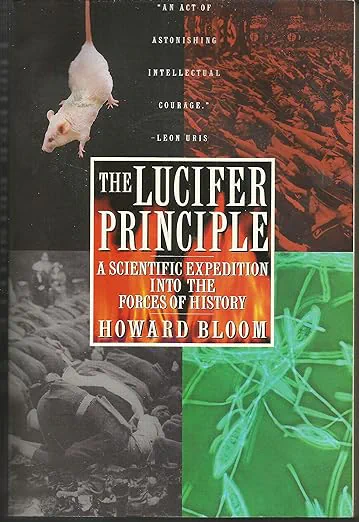
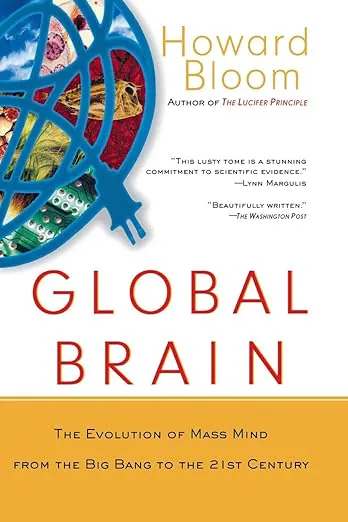
Books by This Guest
Selected titles from the guest bibliography. Use them as context for this appearance, not required listening.
Continue exploring
Paths out of this episode
A stronger next move anchored to this specific broadcast.