
Episode 0539 · Aug 26, 1998 · 2h 31m
August 26, 1998: The Y2K Problem - Edward Yourdon
Key Moments
Open transcriptYourdonwe have already passed the point of no return on Y2K: Yourdon says software-engineering metrics specialist Capers Jones has shown that even if at the start of 1998 the U.S. had assigned 80–85 percent of all programmers to Y2K full time, fixes might have finished - but that didn't happen, and the work won't be done in time.
April 1, 1999 fiscal-year rollover as Y2K dress rehearsalYourdon points to April 1, 1999 - the start of the financial year for Japan, Canada and New York State - as the first 'objective reality' test of Y2K remediation, with New York State already on track to finish only half its mission-critical systems.
The Y2K iron trianglepower, phones, banks: Yourdon defines the 'iron triangle' of Y2K risk - utilities, telecommunications and banking - and tells listeners that if they wake up on New Year's morning to dark lights, dead phones and closed banks, everything else is secondary.
All 108 U.S. nuclear plants non-compliant; embedded systems riskYourdon tells Bell that none of the roughly 7,300 U.S. utility companies - including all 108 nuclear power plants - are Y2K compliant, and that each plant has 10,000–20,000 embedded systems that the NRC has only treated as advisory rather than required.
Yourdon explains his move from New York to Taos as Y2K hedgeYourdon confirms that Y2K was a partial reason he and his wife moved up their plan to leave New York City for Taos, New Mexico, deciding he wanted to be somewhere he could stay indefinitely if needed because cities like New York, Boston or Chicago could 'get pretty bad.'
Yourdon explains that programmers in the 1960s deliberately truncated year fields to two digits, assuming the software would be replaced long before 2000. He reports that according to metrics expert Capers Jones, the point of no return for fixing the problem passed at the beginning of 1998, with only 25 percent of programmers at major companies currently assigned to Y2K work. He identifies the "iron triangle" of utilities, telecommunications, and banking as the critical systems at risk, revealing that zero out of 7,300 U.S. utility companies are currently Y2K compliant.
Yourdon shares his personal preparations, including leaving the stock market and relocating from New York City to Taos, New Mexico. He predicts regional blackouts, dirty power conditions lasting weeks, and a recession potentially rivaling the Great Depression.
Preserved source
From the original ArtBell.com archive
The 2003 commemorative archive preserves the contemporary listing for this broadcast. Links and descriptions reflect the original site and may be outdated.
View the original program listingGuest Library
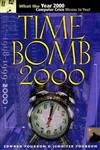
Books by This Guest
Selected titles from the guest bibliography. Use them as context for this appearance, not required listening.
Collection
More in this collection
Continue exploring