
Art Bell plays audio of Greer claiming SETI founder Frank Drake told him the institute received and suppressed interplanetary signals. Shostak responds that he personally asked all four scientists connected to the project, including Drake, and none had heard of Greer. He notes Greer places the Wow signal at Harvard when it was detected at Ohio State, and asks why a privately funded organization would suppress the discovery that would secure its future. Shostak confirms he chaired the committee that wrote international detection protocols, which contain no secrecy provisions. On the Wow signal itself, decades of follow-up with more sensitive equipment have never reproduced it, and modern real-time analysis has eliminated the ambiguous detections that plagued earlier methods. After decades of searching, no confirmed extraterrestrial signal has been received.
A sharp, good-humored exchange between a veteran broadcaster and a scientist willing to answer every challenge directly.
Key Moments
Listening to 30 million channels: Shostak explains the scale of modern SETI searching: a receiver listening to 30 million radio channels at once for a signal that would change the world.
Shostak checks Greer's SETI claim: Responding to Stephen Greer's claim about suppressed SETI signals, Shostak says he asked the four scientists connected with the project, including Frank Drake, and none had heard of Greer.
No secret detection protocol: When Art asks if unknown protocols could hide a signal even from him, Shostak replies that he chaired the international committee that set the protocols.
SETI says there is no secrecy: At the close, Shostak emphasizes that SETI is an open research organization with an observatory open to visitors.
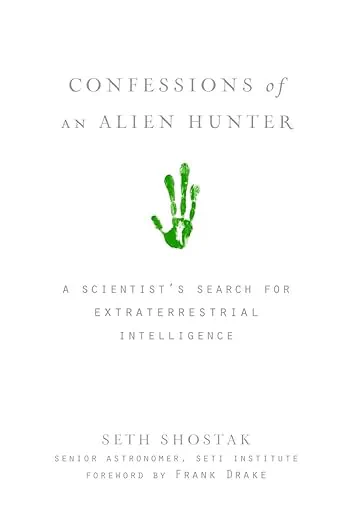
Books by This Guest
Selected titles from the guest bibliography. Use them as context for this appearance, not required listening.
Continue exploring
Paths out of this episode
A stronger next move anchored to this specific broadcast.