April 9, 2010: Astrobiology and Astronaut Training - David Grinspoon
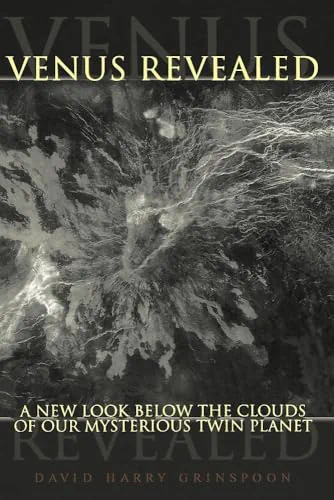
Grinspoon shares his own experience undergoing astronaut training for upcoming private low-Earth orbit missions and discusses the rapid growth of commercial spaceflight through companies like Virgin Galactic. He describes his scientific work modeling climates on Venus, Mars, and Titan, highlighting the recent discovery of active volcanoes on Venus and the strange Earth-like hydrology of Titan, where liquid methane flows in rivers and pools into lakes.
The discussion turns to global warming, with Grinspoon affirming that the science behind climate change remains solid despite the email controversy. He also weighs in on the ethics of terraforming Mars, the debate over active SETI versus passive listening, and the philosophical question of whether humanity should consider itself alone in a universe teeming with potential neighbors.
Key Moments
Humans are babies on the cosmic timescale: Grinspoon argues that with the universe at 13.7 billion years old and our radio era only decades long, any civilization we encounter will likely be vastly older and more advanced.
Most stars have planets - it's certain now: Grinspoon notes that recent exoplanet observations have moved planets-around-other-stars from speculation to certainty, with probably more planets than stars in the sky.
Why advanced aliens may not be hostile: Grinspoon channels Sagan's filter argument: any civilization that survives its own weapons of mass destruction must develop matching moral maturity, so the truly advanced may be peaceful.
Active SETI and the jungle analogy: Grinspoon lays out the active-SETI debate: a Russian astronomer is already broadcasting to nearby stars, while critics warn it's like shouting in a dark jungle full of unknown predators.
Humanity at the end of its adolescence: Asked about Yucca Mountain and waste storage for tens of thousands of years, Grinspoon says we're a species that can barely think past an election cycle yet has tools that demand long-term, global stewardship.
Books by This Guest
Selected titles from the guest bibliography. Use them as context for this appearance, not required listening.