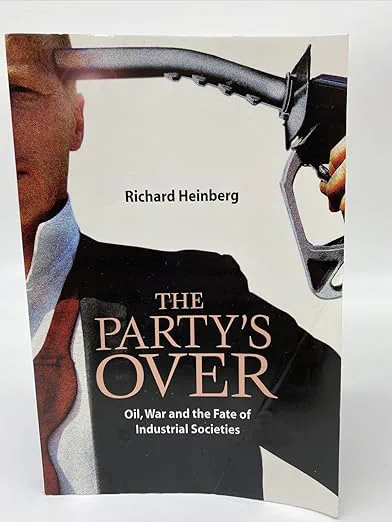
The discussion covers the geopolitics of petroleum, including how pricing oil in U.S. dollars has kept American gasoline artificially cheap, why OPEC nations inflated their reserve figures in the 1980s, and how the Iraq war fits into a broader strategy of securing remaining oil supplies. Heinberg warns that competition between the United States and China for dwindling resources could lead to armed conflict unless international cooperation agreements are reached.
Art and Heinberg explore practical responses for individuals, from energy audits and compact fluorescent bulbs to growing food locally and driving fuel-efficient vehicles. Heinberg describes running his own diesel car on biodiesel made from vegetable oil. He dismisses hydrogen as a realistic replacement fuel and notes that North American natural gas production has already peaked, threatening both home heating and the fertilizer supply that sustains modern agriculture.
Key Moments
The party is the cheap-energy era: Heinberg defines 'the party' as the 100-150 years of cheap fossil energy that built the industrial revolution and predicts the party will end within the century - with the beginning of the end visible in the next few years.
Peak oil hits between 2006 and 2020: Heinberg cites an emerging consensus among petroleum geologists, economists, and physicists that the global peak in oil production will arrive between 2006-2007 at the earliest and 2016-2020 at the latest.
America already past its peak: Heinberg points out the U.S. peaked in 1970-71 and now produces oil at 1940s levels; 24 of 44 principal oil-producing nations have already followed suit, with no investment able to reverse the decline.
Agriculture runs on oil: Heinberg notes oil supplies 97% of U.S. transportation energy and that modern agriculture is heavily dependent on oil and other fossil fuels - meaning peak oil is, fundamentally, a food problem.
Last one standing strategy: Asked if the world will go to war over oil, Heinberg says the path we're on is what he calls 'last one standing' - whoever has the most weapons and competes most fiercely wins, and the only way out is U.S.-China cooperation that looks unlikely.
Books by This Guest
Selected titles from the guest bibliography. Use them as context for this appearance, not required listening.