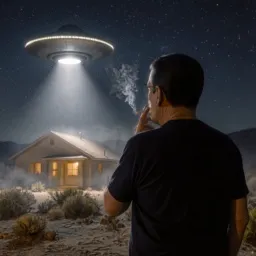
Carroll explains how astronomers detected the planet through tiny Doppler shifts in starlight caused by the gravitational tug of orbiting planets. He notes that finding such a world among only the hundred closest stars suggests there could be a billion similar planets in our galaxy alone. The discussion covers what conditions would truly make a planet habitable, including atmosphere composition, tidal locking, and the effects of doubled surface gravity on human survival.
The conversation expands into broader cosmological territory as Carroll discusses dark matter, dark energy, the expansion of the universe, and modifications to Einstein general relativity. Art and Carroll debate the likelihood of extraterrestrial life, the challenges of interstellar travel, and Seth Shostak revelation that the president would be notified first if SETI ever confirmed an alien signal.
Key Moments
Gliese 581c discovery: a world like Earth, 20.5 light years away: Art reads the breaking news that astronomers in the Chilean Andes have found the first Earth-like exoplanet, with possible oceans, atmosphere, and Goldilocks-zone temperatures.
Shostak: the President would be told first: Art quotes SETI's Seth Shostak: if a confirmed alien signal arrived, the President would be told first - news to Art, who'd never heard Shostak admit that protocol.
A billion Earth-like planets in our galaxy: Carroll says one of the closest hundred stars hosts an Earth-like world; extrapolated to 100 billion Milky Way stars, this implies on the order of a billion such planets.
Gliese 581c may be tidally locked: Carroll cautions the planet has a 13-day year and may always show one face to its star, like the Moon to Earth, making half permanent day and half permanent night.
Why we won't find another civilization tied with us: Carroll notes humans have only had radio telescopes for under 100 years, so any other civilization is almost certainly far ahead or far behind, never within signaling parity.
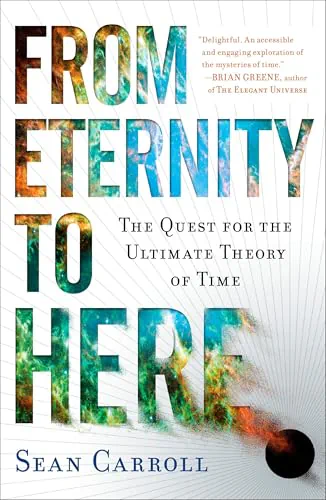
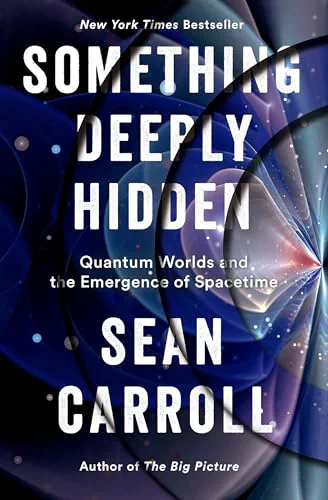
Books by This Guest
Selected titles from the guest bibliography. Use them as context for this appearance, not required listening.
Continue exploring
Paths out of this episode
A stronger next move anchored to this specific broadcast.