
Hoagland reports that sources in New Zealand have confirmed two U.S. workers are hospitalized in Christchurch in critical but stable condition, yet the hospital cannot account for their exact location. The mysterious request to "fill your pockets with salt" draws a connection to nuclear industry protocols, where iodized salt substitutes for iodine tablets during radiation emergencies.
The discussion turns to a 1972 U.S. patent for a nuclear tunneling machine capable of melting through rock and ice, raising the possibility that a clandestine drilling operation at Vostok may have exposed workers to radiation. Hoagland notes that bacteria discovered thriving in the frozen lake in 1998 included never-before-seen microbes, adding another layer of mystery to what is unfolding at the bottom of the world.
Key Moments
Two Antarctic personnel in critical condition at Christchurch Hospital: Hoagland reports a New Zealand source confirmed via Raytheon's John Shreve that two U.S. personnel evacuated from Antarctica are in critical but stable condition at Christchurch Hospital, with Raytheon refusing to disclose the cause.
'Fill your pockets with salt' decoded as nuclear-accident code: An anonymous tipster told Hoagland the order to 'fill pockets with salt' is industry shorthand for a nuclear emergency, since iodized salt is substituted for iodine tablets to protect the thyroid against radiation exposure.
U.S. patent 3,693,731: nuclear tunneling machine: Hoagland cites a 1972 Atomic Energy Commission patent for a nuclear tunneling machine capable of melting through rock or ice, suggesting it could have been used to bore through two miles of ice to Lake Vostok.
South Pole doctor refuses extraction: Hoagland reports the South Pole station's doctor is refusing to be evacuated, theorizing he would be the first witness to radiation poisoning cases and fears being silenced if returned to civilization.
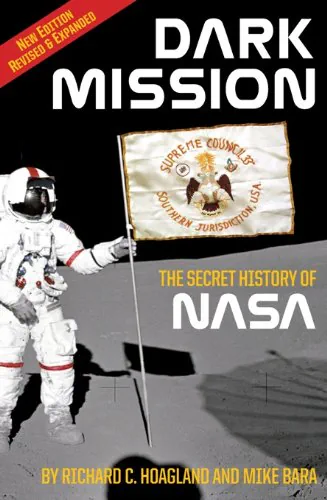
Books by This Guest
Selected titles from the guest bibliography. Use them as context for this appearance, not required listening.

Continue exploring
Paths out of this episode
A stronger next move anchored to this specific broadcast.