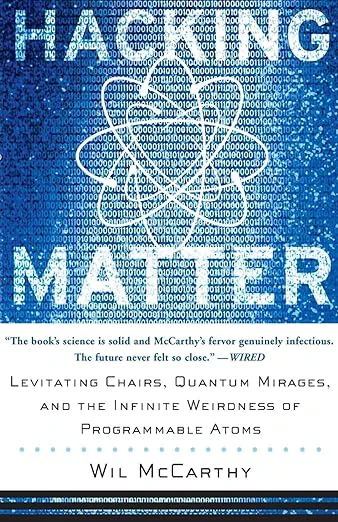
McCarthy explains how quantum dots can trap electrons to create artificial atoms, effectively producing programmable matter that could change its color, conductivity, and thermal properties with the flip of a switch. He describes programmable houses with walls that become windows, ceilings that simulate sunlight, and solar cells reaching 50 percent efficiency.
Art presses McCarthy on the dangers of such technology, drawing parallels to computer viruses and hacking. McCarthy acknowledges that malicious actors could theoretically reprogram materials in buildings or embed hidden sensors, but argues the technology carries less catastrophic risk than self-replicating nanotechnology.
Key Moments
Retirement: an irreconcilable contradiction: Returning to host for one night, Art reflects on retirement: he does not miss the eternal 10 p.m. deadline, but desperately misses the program because he loves radio.
Quantum dots: the artificial atom: McCarthy explains that a quantum dot is an electronic device that traps electrons in a space so small they form atom-like patterns - effectively an artificial atom that lets you give materials properties they could never have otherwise.
Hacking matter - walls turned transparent: Art asks for the dark side of programmable matter; McCarthy describes malicious hackers embedding sensors in your walls, turning walls transparent to destroy your privacy, or even collapsing buildings.
Star Trek replicator - or a brick that thinks it's gold: Art compares the technology to a Star Trek replicator; McCarthy explains a programmable brick can be made to closely resemble gold in color and conductivity but will always weigh what its silicon substrate weighs.
Books by This Guest
Selected titles from the guest bibliography. Use them as context for this appearance, not required listening.