
Episode 1124 · Sep 26, 2004 · 2h 51m
September 26, 2004: Aliens in the Solar System - Dr. David Darling
Key Moments
Open transcriptWe may share the solar system with aliens alreadyDarling argues there is a strong chance material evidence of other intelligence exists somewhere within our own solar system, and that any civilization slightly more advanced than us could already have detected Earth's biosphere from across the galaxy by spotting chlorophyll and oxygen.
Why local SETI was career suicideDarling explains that scientists historically avoided looking for alien artifacts in our own solar system because their colleagues considered it fringe and their jobs were at stake; even astrobiology only recently became respectable.
Roughly 50/50 they're already hereAsked what probability he assigns to extraterrestrials having visited or currently observing Earth, Darling says he ranks it higher than most scientists would - somewhere around 50/50 - and adds that a civilization a million years ahead would necessarily be tracking advanced life on Earth.
Earth has a few centuries leftDarling delivers a stark assessment: he believes Earth has at most a few centuries before humans render it uninhabitable through ozone destruction, ultraviolet exposure, melting polar caps, and the cascading overcrowding caused by sea-level rise.
Art's bismuth-magnesium artifactMid-discussion of how to authenticate alien artifacts, Art cuts in to remind Darling he once submitted a layered bismuth-magnesium sample to Carnegie that emitted more of something than it should, was declared anomalous, and could not be duplicated.
British astronomer Dr. David Darling, author of over 40 books on topics from cosmology to consciousness, argues that the search for extraterrestrial intelligence should focus closer to home rather than on distant radio signals. He reveals that Ukrainian scientists have been transmitting targeted messages toward newly discovered planetary systems, a development largely unknown to the American public. Darling estimates roughly 50-50 odds that extraterrestrials have visited or are monitoring Earth.
The conversation covers how advanced civilizations could detect Earth's life signatures across thousands of light years, why scientists avoid local SETI research due to career stigma, and the possibility that some UFOs represent alien robotic probes. Darling warns that environmental destruction may be detectable from afar and could prompt either intervention or deliberate non-interference from observing civilizations, depending on whether humanity is deemed worth saving.
Guest Library
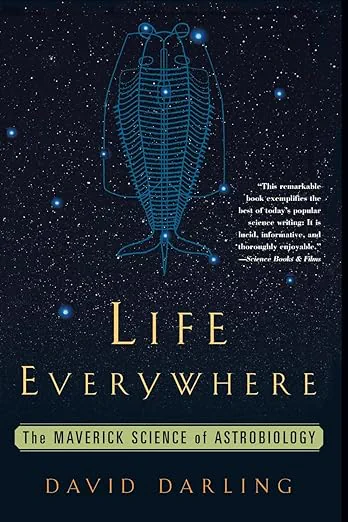
Books by This Guest
Selected titles from the guest bibliography. Use them as context for this appearance, not required listening.
Collection
More in this collection
Continue exploring