
The conversation moves through four pillars of evidence: the sociobiological argument that cross-cultural spiritual behavior suggests genetic origins, neurophysiological findings showing measurable brain changes during prayer and meditation, the genetic basis for why some people are hyper-religious while others are atheists, and the ethnobotanical reality that psychedelic substances can reliably induce religious experiences. Alper also addresses near-death experiences, attributing them to the brain releasing glutamate under oxygen deprivation.
Art pushes back throughout, challenging Alper on whether brain-based explanations truly disprove the existence of God or simply describe the mechanism through which the divine might operate. The two spar over whether atheism itself functions as a kind of faith, and whether any evidence could ever change a committed nonbeliever.
Key Moments
Hard-line atheism defined: Alper distinguishes his atheism: not just rejection of God, but of any spiritual realm whatsoever, even rejecting the soul.
fMRI of prayer: amygdala and parietal lobe shifts: Alper outlines neuroimaging findings: during prayer or meditation, the amygdala (fear), parietal lobe (spatial/temporal awareness), and right frontal lobe (ego) all show decreased blood flow.
Two instincts: spiritual vs religious: Alper separates spirituality (oneness, amygdala/parietal-driven sensory experience) from religiosity (temporal-lobe-driven institutional rituals, mythologies, laws).
Entheogens as universal religious chemistry: Alper cites cross-cultural use of cannabis, ayahuasca, and mescaline (the Aztec 'food of the gods') to induce religious experience as evidence the experience is chemical, not divine visitation.
Burden of proof and scientific humility: Alper concedes that nothing he says can absolutely negate God, invoking Einstein: a million proofs to confirm a theory, only one to disprove it.
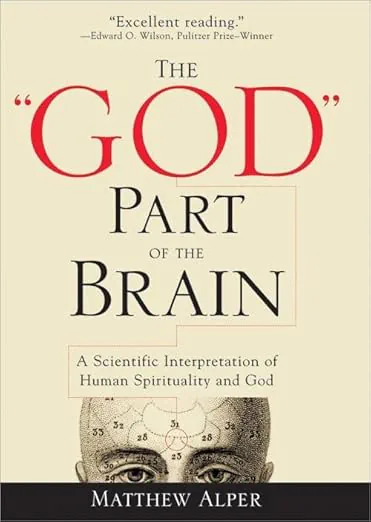
Books by This Guest
Selected titles from the guest bibliography. Use them as context for this appearance, not required listening.
Continue exploring
Paths out of this episode
A stronger next move anchored to this specific broadcast.