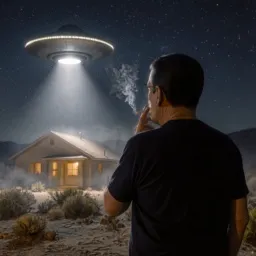
Sims presents his theory that alien entities employ screen memories to mask the true nature of abduction events, giving victims warm false recollections that hide something far more disturbing. He describes working with contactees who, once past the screen memory, react with screaming and terror. He challenges the notion that these beings are benevolent, arguing their behavior more closely resembles infiltration and manipulation.
The conversation turns to a multigenerational abduction case in Pennsylvania involving physical evidence inside the family's home, including a large handprint left in a soot-like substance on a wall. Sims discusses genetic patterns among abductees over 38 years of research, noting that Cherokee-Irish ancestry appears with striking frequency. He calls for more rigorous physical evidence collection to move abduction research beyond anecdotal testimony.
Key Moments
Aliens are breeding traits OUT, not in: Sims rejects the popular hybridization narrative, arguing his 38 years of research show entities are removing something from human genetics, not enhancing us.
Roswell as a deliberate setup: Sims puts on his intelligence hat and theorizes Roswell was an alien-staged crash, a sacrificial ploy to infiltrate the US military-industrial complex while letting humans believe they had captured the technology.
Hickson and Parker: same craft, different memories: Sims uses the 1973 Pascagoula case to show two men on the same craft can disembark with opposite stories: Parker bleeding and traumatized, Hickson serene and contactee-friendly.
Screensaver memories and the screams beneath: Sims explains his screensaver-memory theory to John Mack: contactees have been given pleasant cover memories, and lifting the cover reveals terror underneath.
Oversized handprint on a Pennsylvania wall: In a multigenerational Pennsylvania abduction case, Sims documents a sooty handprint with fingers roughly four inches longer than his own hand and matches it to a similar mark on another abductee's chest.
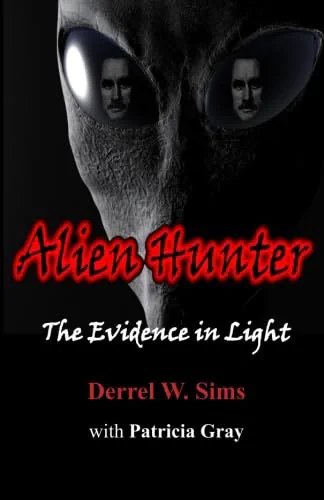
Books by This Guest
Selected titles from the guest bibliography. Use them as context for this appearance, not required listening.
Collection
More in this collection
Continue exploring
Paths out of this episode
Stronger next moves anchored to this specific broadcast.