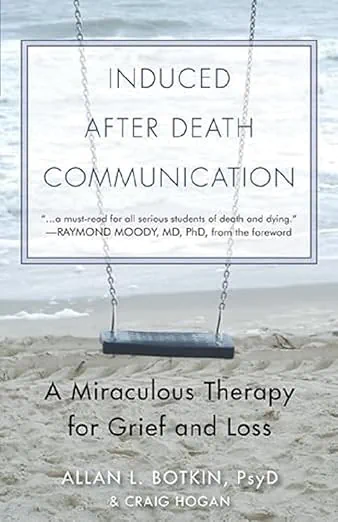
October 26, 2003: Induced After-Death Communication - Dr. Allan Botkin
Botkin recounts his first case, a Vietnam veteran haunted by the death of an orphaned Vietnamese girl killed by sniper fire. During treatment, the patient reported seeing the girl as a grown woman surrounded by white light, expressing gratitude and love. The experience resolved decades of grief and guilt, and follow-up years later confirmed lasting healing. A former patient named Jimmy calls in to describe his own session, where he communicated with four Marines killed by mines and received information about a hidden tunnel entrance he had never known existed.
Botkin addresses skepticism by noting that an intern who simultaneously performed the eye movement technique during a session independently experienced the same ADC as the patient, suggesting an objective phenomenon rather than hallucination. He observes that even deceased individuals described as abusive in life consistently appear apologetic, as though transformed by a life review process.
Key Moments
How a Chicago VA psychologist stumbled into ADCs: Botkin tells Art he spent 20 years treating combat veterans for PTSD at a Chicago VA hospital, and only 'stumbled into' inducing after-death communications when he started experimenting with variations of EMDR eye-movement therapy on grieving soldiers.
98% of patients had an ADC; 94% became believers: Botkin reveals that of his first formal study of 83 grieving patients, 81 had an after-death communication on first attempt, and that 94% walked away convinced they had truly contacted the dead - even though only 8 of the 83 had believed it was possible going in.
Even if the brain produces it, the experience can still be real: Pressed by Art on lab studies that produce near-death-style tunnels and lights with electrodes, Botkin counters that his living, healthy patients have full NDE-style experiences nowhere near death, and that brain mechanisms underlying perception don't make a tree - or a deceased loved one - a hallucination.
The intern who eavesdropped on a patient's ADC: Botkin recounts that an intern observing a session closed his eyes, gave himself eye movement, and reported the same after-death encounter as the patient - written down in advance - and that the lab repeated the result seven or eight times with multiple staff.
Books by This Guest
Selected titles from the guest bibliography. Use them as context for this appearance, not required listening.