October 16, 2004: Signs of Martian Life - Sir Charles Shults III
The conversation takes a provocative turn as Shults reveals that NASA personnel have privately confirmed his findings through phone calls and emails but cannot speak publicly due to nondisclosure agreements. He also presents evidence of recent water activity on Mars, including wash channels, geysers, and what appears to be wet mud captured by rover instrumentation. Shults further alleges that NASA has tampered with images from the Opportunity rover, cropping and altering panoramic photographs and leaving digital watermarks in the modified areas.
Art and Shults discuss the broader implications of confirmed Martian life for science and exploration, the potential for terraforming Mars, orbital solar power stations as an energy solution, and the Air Force's reported pursuit of antimatter weapons technology. The program also covers Ann Strieber's aneurysm and the closure of Robert Bigelow's National Institute for Discovery Science.
Key Moments
NASA and JPL insiders confirmed it privately: Asked whether NASA has responded to his Mars-fossil claims, Shults says no - officially. But he reports being contacted by NASA and JPL employees who, bound by NDAs, have privately confirmed his findings by phone and email.
There was life on Mars - and there is: Shults steps from past tense to present: Mars had life, has water, has fossils - and the Italian researcher Formisano's silenced ammonia/methane findings, he says, point to surviving biological activity right now.
Cataloging the fossils - sea urchins, trilobites, coral: Asked to summarize what he's found, Shults walks through Sol-14 sea urchin lookalikes, trilobites, seashells, squid-like organisms, a 'perfect sea urchin' on Sol images, and Sol-15 coral - concluding Mars must have been ocean-covered.
Why publish it anyway: Art warns Shults this is a career-damaging path - citing what Hoagland has endured. Shults answers that he has to be honest, can't let politics suppress facts, and trusts his other skills to support him whatever the fallout.
150,000 spinoffs and the case for going back: Pressed on what proven Mars life would mean for us, Shults pivots to the practical case for the space program: roughly 150,000 spinoff products to date - microcircuits, plastics, alloys, optics, lasers - and Mars as a viable terraforming candidate given how much subsurface ice remains.
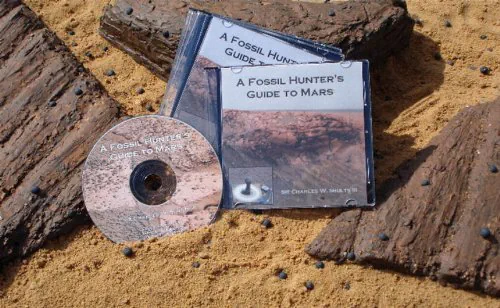
Books by This Guest
Selected titles from the guest bibliography. Use them as context for this appearance, not required listening.
Continue exploring
Paths out of this episode
A stronger next move anchored to this specific broadcast.