
Episode 0874 · Nov 27, 2001 · 2h 33m
November 27, 2001: Random Number Generators - Dean Radin
Key Moments
Open transcriptMind and matter are linkedRadin traces the Global Consciousness Project's roots to a quantum-mechanics puzzle about observation affecting measurement, and concludes that decades of psi experiments have shown to high confidence that mind and matter are linked.
Why random noise is the targetRadin explains that pure noise is the ideal target because any movement away from randomness equals information, and physicist John Wheeler's 'It From Bit' suggests matter itself may arise from information.
Eggs, electrogaiograms, and 9/11Roger Nelson's network of 37 random-number generator 'eggs' around the world, archived to a Princeton server, registered a striking deviation from randomness during the September 11 attacks.
Eggs spiked before the planes hitRadin confirms the eggs began deviating from randomness hours before the attacks began on Eastern time, and entertains Art's theory that the hijackers' own go/no-go decision, or a mass-mind presentiment, may have registered.
Buoys in the ocean of mindRadin offers a working metaphor: each consciousness is a wave on a single ocean, and the eggs are buoys that normally bob randomly but went 'kerchunk' together on September 11 when the ocean itself moved.
Dr. Radin explains how decades of research into the connection between mind and matter led scientists to focus on random noise as the most sensitive indicator of consciousness effects. He describes how the project uses 37 devices called "eggs" distributed globally to detect coherent shifts in randomness that correlate with major world events. The discussion covers the paradox that publicity about the project itself can compromise its effectiveness as a monitoring tool.
Art shares his own experiences with the Princeton ShapeShifter program and his controversial mass consciousness experiments that appeared to produce rain in drought-stricken areas. Dr. Radin offers insights into the relationship between geomagnetic fields and psychic performance, and introduces his online psi-testing platform at GotPsi.com, which has attracted over 34,000 participants from 106 countries.
Preserved source
From the original ArtBell.com archive
The 2003 commemorative archive preserves the contemporary listing for this broadcast. Links and descriptions reflect the original site and may be outdated.
View the original program listingImages and material referenced by the original site
Guest Library
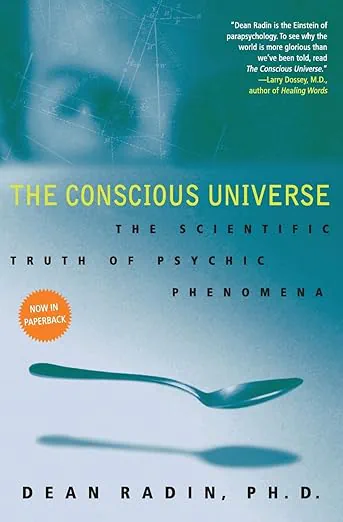
Books by This Guest
Selected titles from the guest bibliography. Use them as context for this appearance, not required listening.
Continue exploring