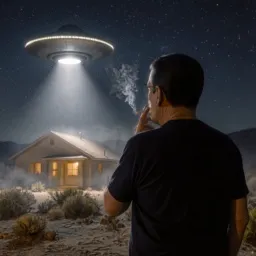
Ward explains how global warming could paradoxically trigger rapid cooling, threatening agriculture and potentially reducing world population from billions to three billion. He describes the relationship between glacial periods and extreme weather, including hundred-mile-per-hour winds that would make jet travel impossible. The professor shares his encounter with Edward Teller, who revealed concerns about nuclear weapons used for planetary defense and their atmospheric risks.
The discussion covers the current rate of species extinction, which Ward says approaches the level seen during the dinosaur die-off 65 million years ago. He argues that while intelligent life is rare in the universe, humans are remarkably resilient and likely "extinction-proof" compared to other species on Earth.
Key Moments
We're already in a mass extinction - the lobster in warming water: Asked when the last great catastrophe was, Ward says it was ten minutes ago - we have been losing megafauna and biodiversity continuously for 15,000 years and are now the lobster in slowly heating water, unaware we are about to boil.
Europe could freeze in ten years - 750 million armed and starving: Ward warns ice cores show climate can flip in as little as a decade. A Gulf Stream shift would put Europe at Canada's true latitude-temperature, leaving 750 million well-armed people unable to feed themselves and forced to take food elsewhere.
Global warming triggers the next ice age: Ward explains the counterintuitive paradox: warming the oceans disrupts the circulation patterns that act as Earth's thermostat, which can plunge Europe into cold and break down the agricultural treaties that hold modern civilization together.
Last specimens of Hawaiian snails kept alive in a refrigerator: Ward describes a colleague in Hawaii who keeps the last three or four individuals of dozens of native land snail species alive in a refrigerator - they will not breed in captivity and have no wild populations left, so he presides over their extinctions one by one.
Tunguska every century - and we'd never see it coming: Ward notes asteroids around 50 meters detonate as airbursts that telescopes cannot detect in advance. A 1908 Tunguska event over Moscow or London would have killed a million instantly, and statistically Earth gets one such event per century.
Preserved source
From the original ArtBell.com archive
The 2003 commemorative archive preserves the contemporary listing for this broadcast. Links and descriptions reflect the original site and may be outdated.
View the original program listingBooks by This Guest
Selected titles from the guest bibliography. Use them as context for this appearance, not required listening.
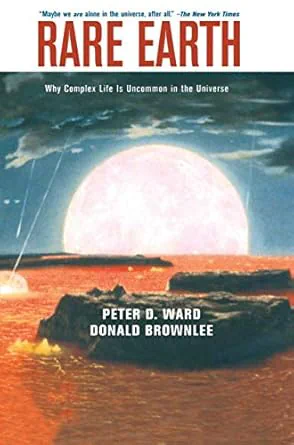
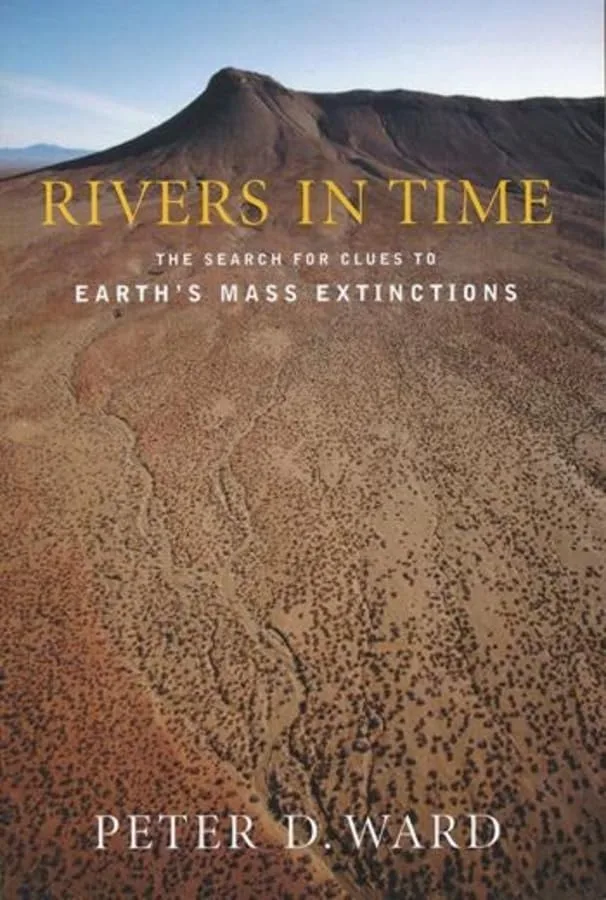
Rivers in Time: The Search for Clues to Earth's Mass Extinctions
Continue exploring
Paths out of this episode
A stronger next move anchored to this specific broadcast.