
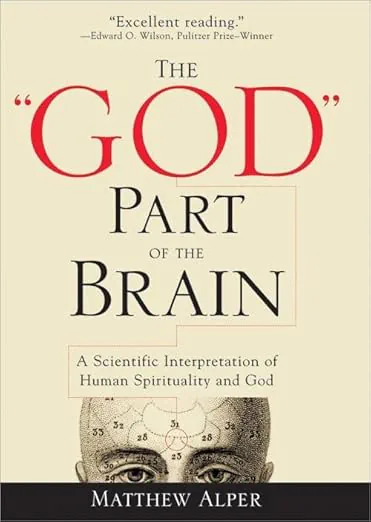
Alper argues that universal religious behavior across all isolated cultures points to an inherited genetic trait shaped by natural selection, evolved to protect human intelligence from the paralyzing anxiety of death awareness. He cites new functional MRI research identifying specific brain regions activated during prayer and love, the case of Phineas Gage demonstrating how prefrontal cortex damage transforms moral character, and temporal lobe epileptics who report feeling the presence of God during seizures.
Art presses Alper on whether identifying biological mechanisms for belief actually disproves God's existence. Alper concedes it cannot be proven but maintains that all evidence of a spiritual reality traces back to brain chemistry rather than transcendental sources, while acknowledging the danger of religious tribalism during economic downturns.
Key Moments
Spirituality as evolution's defense against death anxiety: Alper lays out his core thesis: self-reflection made humans aware of their own mortality, the resulting anxiety threatened the very intelligence that gave us our edge, so nature selected for an inherent belief in something greater - producing afterlife belief and burial ritual in every isolated culture on Earth.
Telling humans God isn't real would be worse than disclosure: Bell pushes Alper: a 1960 Brookings-style finding said disclosing alien life would be socially destabilizing - but proving there's no God or afterlife would be worse. Institutions and religions would crumble; crime might rise. Alper agrees the question is whether it's good to know.
Recessions trigger religious tribal warfare: Alper argues the danger of the religious impulse outweighs the danger of dispelling it: in every economic recession, humans band into their most primitive tribe - religious - and go to war, killing each other in the name of their gods.
Why there are atheists - the spirituality bell curve: Alper applies a bell curve to spirituality the same way it applies to vision or musical ability: most fall in the bulge, a small fringe is born hyper-religious like a Mozart of God, and on the other extreme some are simply born spiritually tone-deaf.
Dostoevsky, temporal lobe epilepsy and touching God: Alper points to the temporal lobe as the seat of religiosity - epileptics there have seizures full of religious experience. He quotes Dostoevsky from his autobiography: 'I really touched God, he came into me, myself, yes, God exists, I cried.'
Preserved source
From the original ArtBell.com archive
The 2003 commemorative archive preserves the contemporary listing for this broadcast. Links and descriptions reflect the original site and may be outdated.
View the original program listingBooks by This Guest
Selected titles from the guest bibliography. Use them as context for this appearance, not required listening.
Continue exploring
Paths out of this episode
A stronger next move anchored to this specific broadcast.