Rather than accepting defeat, Zabel outlines a grassroots rescue plan powered by the internet. He urges fans to send physical letters to UPN, the Sci-Fi Channel, and other networks willing to pick up the series. Art immediately posts Zabel's open letter on his website, and the two discuss how the changing media landscape offers new possibilities for shows abandoned by major networks. Zabel reveals the five-year creative plan that would have traced the alien conspiracy from the 1960s through the millennium.
The conversation becomes a broader meditation on fan power in the emerging digital age, drawing parallels to how Star Trek was saved by viewer campaigns decades earlier. Listeners flood the phone lines with support, demonstrating the passionate community Dark Skies had built.
Key Moments
Five preemption blocks, including a nine-week blackout: Zabel itemizes the on-air sabotage: four big blocks of preemptions, plus a fifth nine-week stretch he reads as proof NBC had already given up on the show.
21 share in Britain - ER-level numbers overseas: Zabel notes Dark Skies pulls a 21 share in Great Britain, comparable to ER's UK numbers, and is an international success in Germany, South Africa, Australia, and South America while NBC was killing it stateside.
Saturday at 8 p.m. - the worst slot on the worst night: Zabel says NBC scheduled Dark Skies on Saturday - historically TV's worst viewing night - at 8 p.m., the worst time slot, with adult content inappropriate for that hour.
The only show on NBC's Saturday lineup NBC didn't own: Zabel reveals that after Congress let networks own their own programming, Dark Skies was the only show on NBC's Saturday night lineup not partly or wholly owned by NBC - and was replaced by a half-NBC-owned show in the same slot.
Books by This Guest
Selected titles from the guest bibliography. Use them as context for this appearance, not required listening.
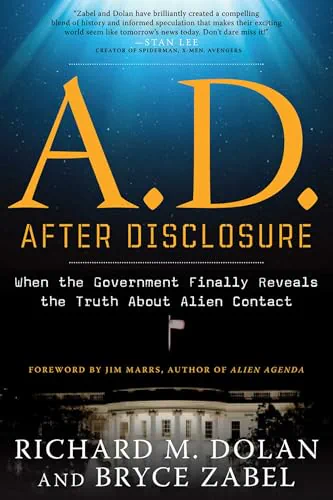
A.D. After Disclosure: When the Government Finally Reveals the Truth About Alien Contact
2012