The discussion turns to eroding personal privacy as cell phones continuously broadcast location data and cameras blanket British city streets. Cochrane reveals that the UK has installed over 30,000 cell sites for 60 million people, while the entire United States operates roughly 22,000, explaining the stark quality difference in mobile service. He describes emerging automotive black boxes that would record the 15 minutes before and after any accident, along with police systems capable of remotely disabling vehicles during pursuits.
Art and Cochrane debate the trade-off between security and freedom, with Cochrane noting that younger generations raised under surveillance simply accept it as normal. They explore how parents track children via mobile phone GPS, how elderly monitoring systems detect deviations from daily routines, and how the convergence of phones, cameras, and computers into single devices promises convenience at the cost of autonomy.
Key Moments
Millions already implanted with electronics: Cochrane points out millions of people already have embedded electronics - pacemakers, artificial respiratory stimulators, pain relief modules - and many must be addressed wirelessly to be tuned.
Anti-abduction transponders for diplomats: Cochrane suggests diplomats and people worried about abduction can have small transponders fitted, similar to the LoJack-style $350 device hidden in expensive vehicles, to make them easy to locate and find.
US fingerprinting visitors at the border: Cochrane describes the new US entry system - fingerprints rolled on an electronic pad and a face photograph linked to your scanned passport in seconds - and suggests the system should learn frequent travelers and let them through.
Why US cell phone audio is poor: Cochrane explains a UK mobile operator runs 30,000 cell sites in an area smaller than Texas while the entire US has only about 22,000, producing 40-mile-wide cells, blank spots and the digital audio quality Art compares to dog poop.
Computer gamers gain 10-15 IQ points: Cochrane reports a UK survey claiming heavy computer and mobile phone users score 10 to 15 IQ points higher than book readers, attributing it to fast strategic thinking and three-dimensional spatial awareness.
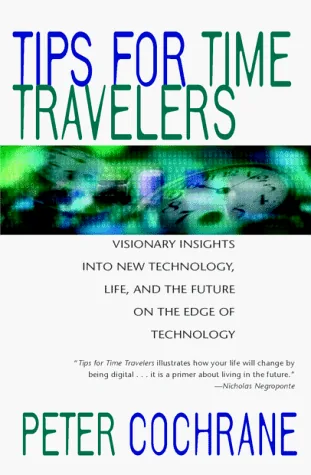
Books by This Guest
Selected titles from the guest bibliography. Use them as context for this appearance, not required listening.